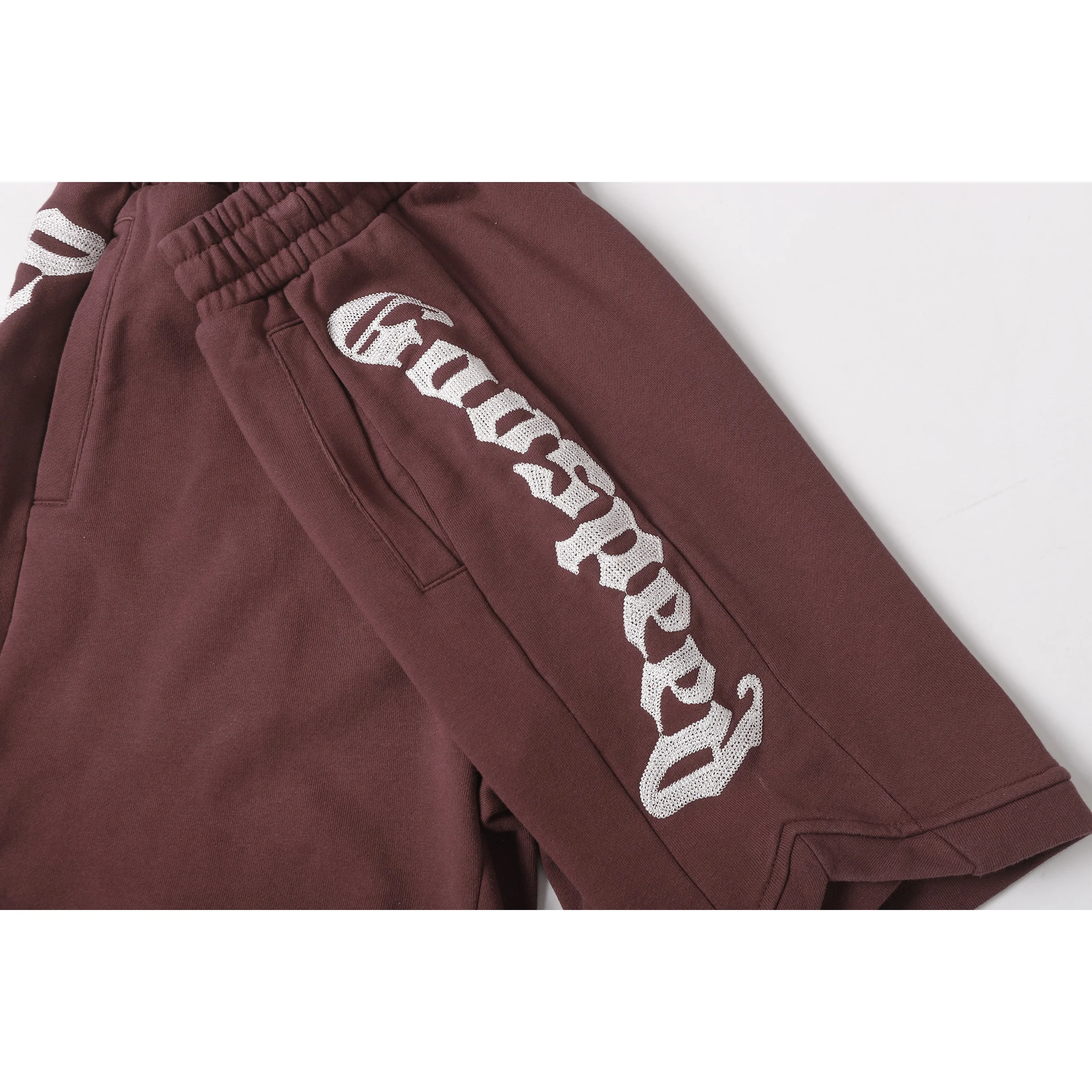
Godspeed NY Hoodie Street Ready Joggers

How Godspeed Compares to Competing Streetwear Labels: Finding the Right Label for You

Streetwear in 2026 has become crowded. Every month brings yet another release, yet another logo, yet another label vowing to shape a generation. Cutting through that clutter, Godspeed has staked out a clearly defined identity grounded in meaning rather than mere product. Before you decide where your money goes, it helps to understand what sets apart a brand with a philosophy from a brand with just a design file. This write-up examines what Godspeed truly represents, how it measures against its streetwear rivals, and how to work out which one suits your style and your beliefs.

Selecting a streetwear label involves more than just the design printed up front. It’s about fit, material heft, how long it lasts, and whether or not the piece stays current two years down the line. We’ll break down the meaningful contrasts so you’re able to make a decision grounded in substance rather than hype alone.

Getting to Just What Godspeed Truly Means?

Since the name holds significance beyond fashion, the query “what is Godspeed” keeps arising. Godspeed’s meaning goes back centuries — it’s a phrase used to wish someone well-being and success on a journey, commonly uttered at the start of something uncertain or difficult. Rather than a marketing afterthought, that sentiment forms the brand’s backbone.

Godspeed as a label converts that idea of motivation and forward motion into everyday garments: Godspeed tees, Godspeed hooded layers, and layering essentials created for people who see getting dressed as part of a bigger personal narrative. Rather than following fleeting trend waves, the label anchors itself in a message that stays relevant regardless of trend cycles.

Many streetwear labels construct their identity around scarcity or celebrity co-signs alone — which is why this matters when weighing brands. Godspeed’s approach is different — the message lives in the name itself, which gives every godspeed tee carries a built-in reason to exist beyond just looking good. This is a meaningful difference in 2026, when buyers are warier of hype with nothing behind it Boom branding godspeed than ever.

As soon as you get to know this backstory, it explains itself why such a large number of customers type in “godspeed meaning” before purchasing. These buyers want the narrative behind the shirt, not just the tee alone.

Comparing Godspeed to Other Streetwear Labels

A large share of streetwear-focused companies slot into one of three buckets: hype-centric logo labels, stripped-back basics labels, or narrative-focused labels that weave a story into every piece. Godspeed belongs clearly to that third group, next to a few rival labels, but the delivery sets it apart in fabric choice, silhouette philosophy, and pricing strategy.

Logo-centric labels typically lean on resale value and scarce releases to create demand, which can mean marked-up costs disconnected from actual production cost. Minimalist basics brands differentiate themselves primarily via cut and cloth quality, often at elevated pricing tiers with little brand story attached. Godspeed occupies the middle ground: meaningful branding without the artificial scarcity games, paired with builds intended for daily rotation rather than shelf display.

Fit is another differentiator. While certain brands chase only exaggerated, boxy fits, the brand’s shirts and hoodies are designed to suit different physiques and styling approaches, from easy streetwear-style layering to slightly more fitted casualwear. That flexibility is a practical advantage for customers who want one hoodie that works for gym-to-street transitions rather than a specialized cut that only works one way.

Factor Godspeed Hype-Driven Labels Clean-Design Basics Labels
Core identity Purpose-led (“godspeed” as a word of support) Limited supply plus celebrity buzz Fabric quality and clean design
General cost bracket Mid-range Steep, often inflated on the secondary market High-end
Launch pattern Steady drops with a consistent voice Restricted drops engineered around hype Seasonal, understated
Signature pieces Godspeed shirt, godspeed hoodie Logo tees, collab pieces Essential tees, plain hoodies
How well the design ages High — message doesn’t expire Mixed, since it hinges on trend cycles High — but less emotional connection

The Godspeed Shirt: What Sets It Apart

A godspeed shirt is more than a surface for lettering. The lettering style, placement, and composition as a whole are crafted to communicate motion and encouragement without shouting for attention. Such restraint is a conscious choice — the label lets the phrase do the heavy lifting rather than surrounding it with excessive graphics.

Compare that to labels where the shirt exists mainly to showcase a logo at maximum size. Godspeed’s shirts tend to lean on negative space on purpose, allowing the graphic or wording space instead of dominating the piece. That design restraint often ages better, since large, loud branding often looks stale within a year or two while understated typography holds up longer.

Fabric-wise, shoppers should always check fabric weight and composition on the specific product page before purchasing, since those particulars shift depending on style and season. What remains constant throughout the godspeed shirt range is the guiding idea: clothing built to be worn regularly, rather than kept aside for one photo-worthy outfit.

It’s at this point that “god speed clothing” as a search term starts to matter — shoppers are actively looking for pieces that read as meaningful rather than just decorative, and that search behavior reflects a larger movement in 2026 toward brands with substance.

The Godspeed Hoodie vs Competitor Hoodies

Within most street-style rotations, hoodies function as the backbone, and this particular hoodie is designed to serve as an everyday layering piece instead of a statement-only item. This stands in real contrast with brands where the hoodie functions primarily as a marker of hype, priced high because of brand recognition rather than because of construction.

When you stack hoodies from different labels side by side, three things matter most: fabric weight (light enough to layer vs heavyweight for standalone wear), silhouette (boxy oversized vs slim-cut), and how long the print holds up. Godspeed’s approach favors multi-season usefulness — a piece that performs layered under a jacket in colder months and on its own when it’s warmer, instead of something built for only one use case.

Other hype-focused brands often lean into a particular shape locked to a passing trend, which can mean the garment loses relevance as soon as the trend passes. Meanwhile, minimalist basics brands may deliver top-tier material but omit a real emotional connection, leaving the hoodie coming across as generic despite good construction.

Bridging that gap is what Godspeed’s hoodies attempt: functional enough for everyday wear, yet carrying a message that gives it a reason to be chosen over a generic substitute. For buyers building a 2026 capsule wardrobe, this balance lowers the temptation to constantly replace pieces chasing the next trend.

Pricing, Value, and Durability Over Time

Cost per wear matters more than the initial price in streetwear. A mid-range shirt worn fifty times offers better value than a hyped shirt worn only five times before feeling irrelevant. It’s in this space that meaning-focused labels such as Godspeed tend to outperform hype-driven brands over the long run.

Since costs shift with sourcing conditions and demand levels, be sure to confirm current pricing directly on the brand’s product pages. A fair expectation for Godspeed buyers is pricing set to remain approachable compared with higher-end minimalist brands, without dropping into the disposable-fashion tier where craftsmanship is fully traded away for cheapness.
Design relevance is a key part of lasting wearability. In contrast to a meme-driven graphic, a phrase such as “godspeed” carries no expiration date, so pieces purchased in 2026 stand a reasonable chance of remain stylistically relevant well past 2028. That’s a meaningful consideration for shoppers tired of replacing their closet every trend cycle.

Guaranteeing resale value is tougher across any streetwear brand, but pieces with a clear, consistent brand identity — as opposed to one-off graphic releases — typically retain buyer interest longer in resale markets, simply because the underlying message stays clear and meaningful.

Finding the Brand That’s Right for You

Purpose-first is how it should kick off. If what you’re seeking is clothing that reflects a personal mindset — staying power, momentum, motivation — a statement-first label like Godspeed will resonate more than a branding-heavy brand. If your priority is investment-grade basics with understated logos, a minimalist label might serve you better despite the steeper cost.

Consider your wardrobe’s current gaps. If you’re missing a versatile hoodie that layers well and doesn’t scream a specific trend year, the godspeed hoodie is worth trying. If you want a shirt with a phrase that means something rather than just filling space, a godspeed shirt fits that need directly.

Consider how frequently you really make purchases. Godspeed and similar brands suit those who favor building a smaller, more purposeful wardrobe rotation, whereas customers loyal to hyped-up brands often pursue limited drops more than once a month.

To wrap up, take into account how its backstory resonates with you on a personal level. Godspeed clothing works because the phrase carries authentic, long-standing meaning — an expression of hope for safe travels and good fortune. If that rings true for your present chapter, it becomes more than just a garment; it acts as a subtle daily cue. More than any technical detail alone, it tends to be that emotional alignment that serves as the true tiebreaker between one streetwear label and another.

How Betrayed By Everyone Loved Stories Works Top Rated Dramas

The Best Opening Line in Short Dramas Is “Daddy?”

Confession first: I will watch anything that starts with a little child pointing at a stranger and calling him Daddy. I am not alone, either: short dramas know this about a lot of us, me included. The secret-baby setup is a pressure cooker, because the child is living proof of a past the grown-ups have been dodging. Bring in a hockey star, a football legend or a single dad who never knew he was one, and you will find the drama story practically writes itself. Here, then, is the list I keep texting to my friends, arranged as “if you liked this, Betrayed by Everyone, Loved by Four drama try that,” plus a family-drama corner for the real tearjerkers. Each pick is a vertical short series made up of episodes that usually run a minute or two, which makes them good short movies for a daily commute if you watch a handful at a time. I also listed the app and the episode count for each one, so you know the commitment before the first cliffhanger hooks you.

Liked Breaking the Ice? Try Love on the Sidelines

The first one people bring up when they find out I watch these is Breaking the Ice. It streams on ReelShort, runs about 70 episodes if you count the trailer, and is based on Shutout, a novel by Jami Davenport. Back then, Caroline concealed her pregnancy from her first love, Easton. He has no idea their daughter is his, even though eight years later he is a hockey star and her boss too. In the 2024 cast, Nicole Mattox and Seth Edeen take the leads. Nobody gets a breather from the tension, and neither do you, because the secret and the paycheck are under the same roof.

If that premise had you yelling at your phone, put on Love on the Sidelines next. In the most literal sense, it is a reel short drama, a ReelShort original that also appears on DramaBox, with 64 episodes and Noah Fearnley and Hannah Record in the leads. Natalie’s brother causes the death of football star Karl’s sister and ends Karl’s career, so Natalie drops out of sight for seven years. Karl finds her again only to learn she has a “husband” and a “daughter,” and he refuses to let her go. Let me just say those quotation marks are doing a lot of work. Both series trade one sport for another while keeping the same formula: a long absence, a child caught in the middle, and an athlete who learns the past never stays on the bench.

If You Loved Kidnapped by the Mafia, Try Quiet in the Office!

I mean this as a compliment: Kidnapped by the Mafia is GoodShort at its most magnificently over the top. Spanning 86 episodes, it has Rosa Singerman and Franky Cammarata heading the 2025 cast. Violet’s boyfriend hands her over to mafia king Vincenzo as a contract bride, which is a solid argument for screening your boyfriends. When Vincenzo is badly hurt saving her, she marries him out of gratitude, and then assassins attack at the wedding. Put simply, it wraps contract marriage, love after marriage and a wedding-day ambush into one neat package. It stays watchable because of the oldest trick in romance, where the scariest man in the room turns out to be the one who takes the hit for you.

Is that “scary man, soft center” dynamic your weakness? Check out Quiet in the Office! for a completely different flavor. Premiering in February 2026, this Korean original from Vigloo is also on GoodShort, where it runs 58 episodes. Yulhee and Lee Jae-bin lead the cast, and the story is adapted from a web novel and webtoon. When Kim Na-yul, an exhausted editorial designer, finally confronts her abrasive, workaholic boss, Kwon Si-jin, she gets to see a side of him nobody at work knows about. One note before you start: the series carries a 19+ rating, so it is meant for adult viewers. After a week of secret babies, two worn-out people and one office, with no kids and no mafia, can be exactly right.

The Family-Drama Corner

In a row is how I would watch these last two, since they belong together. GoodShort has both, and both put a child at the center of the story. The direction of the fatherhood question is what differs. What happens when a man learns he might be a dad? One asks that, and the other asks what happens when a dad keeps failing the child he already has. If you watch them in a row, they almost argue with each other. With this pair, keep a box of tissues within reach.

First, Found My Daddy at the Construction Site

The most irresistible hook on this list belongs to this GoodShort series, which spans 60 episodes. Gisele, Tristen’s boss, is a billionaire chief executive, while Tristen is a broke bricklayer. Gisele’s little daughter looks at Tristen out of the blue and calls him “Daddy”. Then comes a matching necklace, suggesting Tristen is the long-lost father after a six-year search. GoodShort tags it with secret identity, female CEO and contract marriage, so the class gap between a hard hat and a corner office is only the first twist. The cute-kid factor is doing heavy lifting here, and it lifts gorgeously. Can you hear a tiny voice say “Daddy” without melting? Then you are stronger than me.

Then Watch Three Strikes, Dad’s Out

Strictly speaking, it is not a sports drama, but the title is a baseball joke, so it fits right in. Featuring Noemi VanSlyke and Ryan Vincent, Three Strikes, Dad’s Out is a 65-episode GoodShort series from 2025. Her boss, William, is the reason Karina, an heiress, gives up her inheritance. He is still in love with Fiona, even though he marries her in secret. Fiona comes back with a son, William neglects his own child, and Karina decides to give him “three more chances”. It is toxic love with a cute kid and a slow-burning regret arc, and watching the strike count climb is weirdly satisfying. Pair it with Found My Daddy at the Construction Site, and you end up with two very different answers to the same question about what makes someone a father.

Quick Guide: Title, App, Episodes and Theme

Everything above sits here in one place. Episode counts are taken from the official app pages. That total counts the trailer for Breaking the Ice. The count for Quiet in the Office! follows its listing on GoodShort. Trust the app, because counts on third-party sites often vary. For your next weekend queue, bookmark this table.

Series title Platform Number of episodes Theme
Breaking the Ice ReelShort About 70 Hockey star, secret daughter
Love on the Sidelines ReelShort, plus DramaBox 64 Football and a second chance
Kidnapped by the Mafia GoodShort 86 Mafia-style contract marriage
Quiet in the Office! Vigloo, plus GoodShort 58 Workplace romance, rated 19+
Found My Daddy at the Construction Site GoodShort 60 Single dad, cute kid
Three Strikes, Dad’s Out GoodShort 65 Neglectful dad, regret

Watching These Dramas Online Without Overspending

A bit of practical advice before you begin, since watching dramas online can get pricey sooner than you expect. According to ReelShort’s own blog, the first few episodes of a series, somewhere between 5 and 15, are usually free, and one ad can unlock two more. The site says free unlocks happen only in the app, though you can also watch in a web browser at reelshort.com. Weekly passes auto-renew and run up to about $19.99 in the US App Store as of September 2026 on both ReelShort and GoodShort, where GoodShort’s weekly options begin around $5.99. Since deleting an app does not cancel the subscription, cancel in your App Store or Google Play settings, and note that prices vary by country, platform and promotion. The “unlimited coins” mods and copycat streaming sites are unofficial and not worth the risk, so please skip them. Stick to the official apps, grab a snack, and let the kids in these shows do the heart-stealing.

Coach Leather Bag Buyer Guide Care Dos and Donts

Coach Heritage Explained: Bonnie Cashin, the Creed Patch and Glovetanned Leather

Coach’s story is commonly recounted in a tidy form that the records do not fully support. This overview follows the brand stage by stage, from a modest Manhattan workshop to an accessible luxury name, and highlights the points where sources disagree. Three strands connect this history: glovetanned leather, the designer Bonnie Cashin and the creed patch attached within vintage bags. Where a detail stems only from Coach’s own narrative or from vintage guides, the text says so. When dates conflict, it offers a range or omits the date rather than speculating. That caution matters, because several widely repeated claims about early Coach turn out to be myths. Below, the timeline sums up the dates that hold up.

Year Milestone Strength of evidence
1941 Manhattan workshop starts trading, producing men’s small leather goods Well documented
1946 Miles and Lillian Cahn come on board at the workshop Well documented
1950s Glovetanned leather finish introduced Coach’s own dating
Around 1960 to 1961 The Coach name appears Exact year unclear
1961 The owners are bought out by the Cahns Well documented
1961 or 1962 Contract design work by Bonnie Cashin begins Coach’s own pages differ
1964 Brass turnlock closure introduced Well documented
1972 Leather hangtag debuts Coach’s own dating
1974 Cashin departs Coach Well documented
1985 Coach is bought by Sara Lee Well documented
2001 Signature “C” collection debuts Well documented
2017 Coach, Inc. takes the name Tapestry, Inc. Well documented
Undated Horse-and-carriage emblem Dating unsettled

1941 to 1961: The Workshop Before the Name

Coach started in 1941 as a modest family-run leather workshop in Manhattan, manufacturing men’s small leather goods such as billfolds and wallets. Coach’s own telling places six artisans working in a loft on 34th Street, and the firm reportedly traded as Gail Leather Products. In 1946 Miles Cahn and Lillian Cahn joined, and by about 1950 Miles was managing the factory. Despite a claim repeated in many retellings, the Cahns did not start the company: they bought the business from its owners in 1961, and the workshop had already been operating for five years before they arrived. The Coach name dates to about 1960 or 1961, with sources differing on whether handbags carried it first or the company took it at the buyout. Lillian Cahn reportedly proposed adding women’s handbags, the step that pushed the business beyond men’s accessories and towards the first coach handbags.

The Baseball Glove Idea Behind Glovetanned Leather

No finish is coach bags more tightly tied to vintage Coach than glovetanned leather. Miles Cahn is credited with the idea, which was based on the way a worn baseball glove becomes soft and supple. The finish is dated by Coach to the 1950s, which would place it in the workshop years, before the Coach name came into use. The leather was meant to soften and improve with use, so a bag was expected to get better, not worse, over years of carrying. Today’s styles such as the Soho Bag 25, the Juliet Shoulder Bag 25 and the Kisslock Frame Bag appear in glovetanned leather in Coach’s product listings. Technical claims about the tanning chemistry behind it rest only on third-party speculation, so they are not included here. In short, the record bears out this much: a baseball-glove idea gave early Coach its soft, supple character, and the finish is still highlighted by Coach in its own design stories.

The Early 1960s to 1974: The Era of Bonnie Cashin

Coach’s earliest lead designer was Bonnie Cashin, yet she was never an employee or a co-founder. She created about two small collections a year as an outside contractor, reportedly by way of the Bonnie Cashin account. Exactly when she started is uncertain: Coach’s own pages give both 1961 and 1962, so the sources differ. The brass turnlock closure, introduced in 1964, is her longest-lasting contribution; by Coach’s account, it was based on the toggle on the top of her convertible car. She is also given credit for side pockets, kisslock coin-purse pockets and brighter colours. Coach’s product copy says she received a Leather Industries American Handbag Designer Award in 1968. Cashin parted ways with Coach in 1974, but her name survives in recent coach clothing such as the Classic Cashin Coat and in restored Cashin-era bags resold through (Re)Loved.

The Late 1960s and Early 1970s: Creed Patch and Hangtag

Fixed inside a Coach bag, the creed patch is a leather patch bearing a short statement about the bag’s materials and making. Vintage guides trace the first appearance of creeds to the late 1960s or early 1970s and report that the earliest had no serial number. Reportedly, the first versions were written in capital letters, described the bag as natural glove-tanned cowhide and explained scars and wrinkles as natural marks of the leather. According to guides, the earliest pieces showed “Made in New York City” and examples from the 1970s to the early 1990s bore “Made in United States of America”; later creeds named the country where a bag was handcrafted. By Coach’s account, the leather hangtag was introduced in 1972 and added a familiar detail to the outside of the bag. Nowadays Coach calls the patch a Storypatch and says every Coach bag carries one: a stitched statement on craft with a unique registration number. Although Coach presents it as a mark of authenticity, guides warn that counterfeiters copy creeds, so the patch alone cannot prove a vintage coach bag is genuine.

The Horse and Carriage: An Emblem Lacking a Settled Date

Shown on Coach’s enduring emblem is a coachman sitting atop a carriage drawn by two horses. This history does not assign it a date, because its origin date is genuinely unsettled. Other histories say the Coach name was adopted at a moment that falls later than the emblem’s introduction in Coach’s own account. Those accounts are tricky to reconcile, and no primary document settling the question was found. Logo blogs give several competing dates, and the widely told story that Bonnie Cashin designed the emblem is unsupported by documents. The emblem is best treated as a long-running brand symbol rather than a fixed milestone on a timeline. The Signature “C” monogram, described later in this history, is a different design from this emblem.

1985 to 2013: The C Monogram and New Owners

Coach was bought by Sara Lee in July 1985, in a deal that was reportedly worth about $30 million. Coach ties the original Swinger, a short-strap zip-top shoulder bag with a turnlock, to 1987. Reed Krakoff reportedly signed on as creative lead in 1997, and Coach floated on the stock market in October 2000. In 2001, the same year the Signature collection introduced the “C” monogram, Sara Lee reportedly completed its exit. Many shoppers see the pattern as classic Coach, though it dates from 2001 rather than from the mid-century heritage years, and that is why this timing matters. The monogram was reportedly developed under Krakoff and landed during the early-2000s fashion for monograms. Coach says the original Soho Flap arrived in 2006, and in June 2013 the company announced Stuart Vevers as its new creative lead.

2014 to Today: Heritage as a Creative Resource

In 2026 still the brand’s Creative Director, Stuart Vevers reportedly showed his first Coach collection in February 2014. In 2016 Coach opened Coach House flagships on Fifth Avenue in New York and at 200–206 Regent Street in London, a landmark coach store for coach uk shoppers. Also that year the Rogue satchel launched; it was later withdrawn and returned in 2021. Only the corporate parent changed its name when Coach, Inc. turned into Tapestry, Inc. on 31 October 2017. Based on a 1970s archival shape, the Tabby launched in 2019 as a new design, and the Pillow Tabby followed in 2021, when the (Re)Loved programme set about restoring and reselling pre-owned bags. The Coach Originals line now revives archive designs, though as newly made bags and not as vintage pieces. The Kisslock Frame Bag in glovetanned leather reportedly featured in the first look of the Fall 2026 show, harking back to the kisslock clasps of the Cashin era.