Handmade Italian Coat The Row Luxury Bag

The Row Crossbody and Small Bags: A Complete Rundown

Big, restrained leather carryalls remain what The Row is most often recognised for, but the design reasoning reads most clearly in the smallest pieces. On a crossbody or a clutch there is no margin for error — the proportions have to be correct, the closure has to shut cleanly, and the leather has to do the carrying on its own. Here is a row bags overview of the small end of the line, addressing crossbody styles, compact shoulder bags, pouches and clutches. Every figure is an observed 2026 market price logged in September of that year, not an official price list, because the brand issues none. If a piece is confirmed Made in Italy on the brand’s own product page, the guide records it; nothing is assumed. Bags only here, with ready-to-wear and footwear left outside the frame.
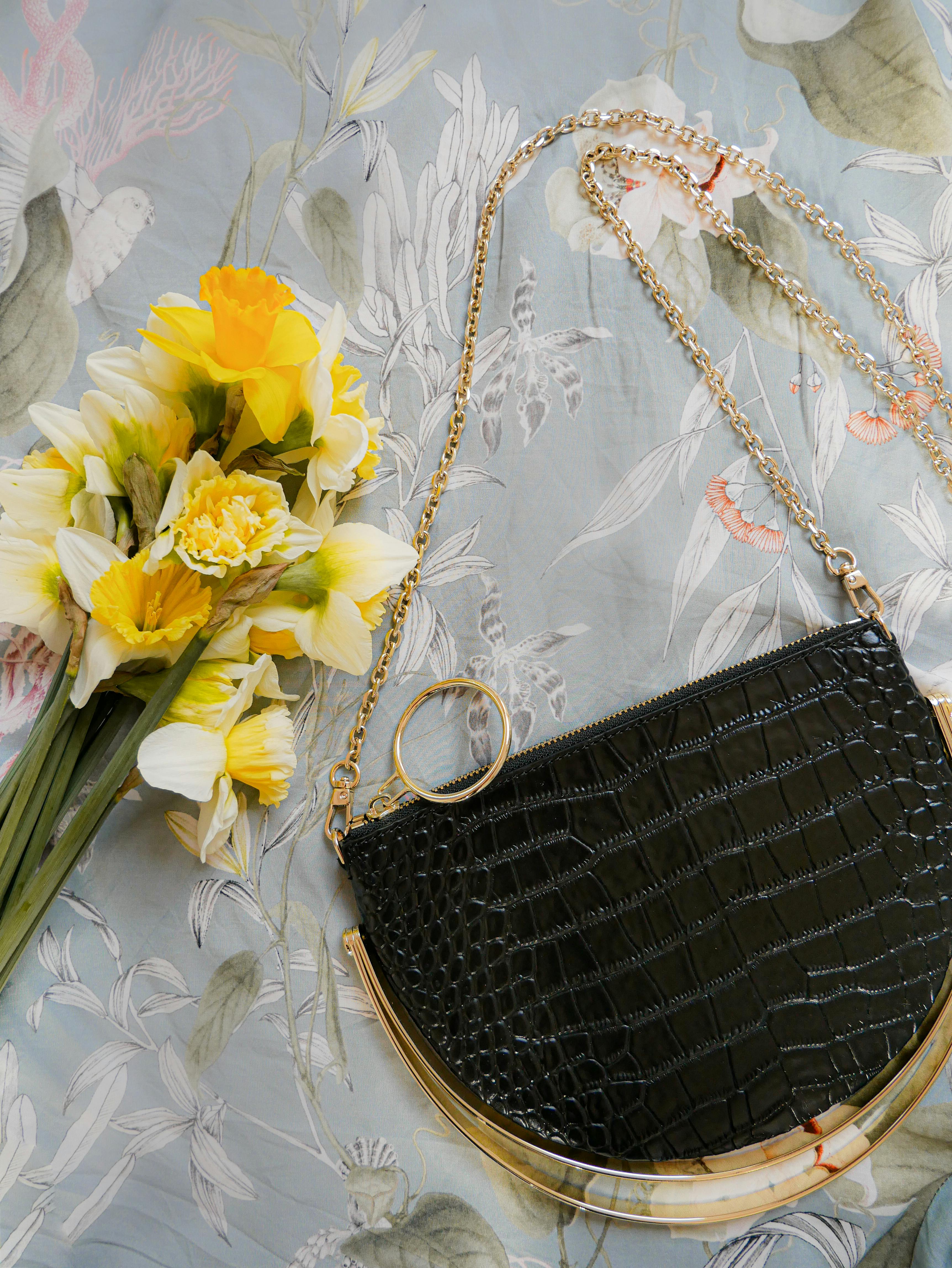
What Qualifies a Small Bag as One of These

No exterior logo plaque and no monogram print mark The Row bags, so a small piece is identified by silhouette, proportion and construction and nothing else. A discreet exterior stamp sits low on the side, where it vanishes into the leather, and a second stamp is placed inside. Hardware is palladium-plated in a matte or brushed finish, declaring itself through weight and precision rather than shine. Linings count as luxury materials in their own right, so nappa, lambskin, calfskin and cotton herringbone take the place of the logo jacquard other houses print. You can ignore those decisions on a large tote; on a clutch the size of a paperback there is nothing else to look at. For that reason the small pieces are the clearest route into what the label does with leather.

  • No exterior plaques, nor branded hardware, no monogram print
  • Identified on silhouette, proportion and construction
  • A discreet exterior stamp and a second interior stamp
  • Matte or brushed palladium-plated hardware
  • Linings in nappa, lambskin, calfskin or cotton herringbone

The Crossbody Bags

Crossbody styles form the most practical part of the collection and, on observed 2026 prices, one of the most accessible. The group covers roughly $1,290 to $2,550, placing its floor below almost every top-handle style the brand makes. Orientation prefixes are the house naming convention, so N/S and E/W divide upright versions from wide ones within the same idea. The Park family lands partly within this group, the row handbags bags as it takes in the N/S Park Tote, the Park Tote, the Park Tote Three, the XL Park Tote and the N/S Park Crossbody. Materials come down to calfskin in smooth, grained and saddle finishes, with palladium-plated fittings throughout. Since not one carries visible branding, buyers use them as daily bags rather than occasion pieces.

The N/S Park Crossbody and the Rene Crossbody

The N/S Park Crossbody was observed at $1,290, which makes it the smallest entry into the Park family short of buying a tote. It keeps the family’s flat, unstructured logic, scaled down to something worn against the body instead of carried in the hand. Anyone who already owns a The Row tote bag from that line will see the same construction language, just at a fraction of the volume. Just above sits the Rene Crossbody, observed at $1,350. The pair sits inside the entry band the collection keeps at its lowest end, roughly $590 to $1,500. For a first row bag, this pair is where the smallest outlay meets the fullest expression of the house style.

The Izzy, the Annie and the Large Slouchy Banana

Across its orientations the Izzy was observed at $2,300 for the E/W Izzy and $2,490 for the N/S Izzy, with a Small Izzy shoulder version at $2,100. The N/S Annie Crossbody was observed at $1,950, which puts it between the entry crossbodies and the Izzy group. The Large Slouchy Banana was observed at $2,550, and the brand’s own product page states it as Made in Italy. At the time of research that page was showing waitlist availability rather than open stock, which is unremarkable for the label. The upper half of the crossbody range is held by these three lines, and structure and leather weight rise noticeably there. They are also the pieces most often cross-shopped against small shoulder bags rather than against each other.

Small Shoulder Bags: Half Moon and the 90’s Bag

Half of the four signature models exist at this small scale, a fair measure of how seriously the label regards the format. The Half Moon was observed at $1,390, a leather variant was seen at $1,690 at a stockist, and the model is confirmed Made in Italy. Officially the dimensions are 8 x 13.5 x 2.5 inches, though sources do not agree on the exact figures, which makes it the official reading rather than a settled measurement. The 90’s Bag was observed at $1,090 and is the least expensive of the four signatures, with a 90’s Shoulder version at $1,450. Both rely on curve and drape rather than hardware for their identity. Between them they form the cheapest genuine entry into the top row bags by silhouette rather than by category.

Clutches, Pouches and Evening Formats

Construction detail is most visible in the clutch group, and the Bourse Clutch is the clearest illustration of it. It was observed at $1,590, is confirmed Made in Italy, and pairs a calfskin exterior with a nappa lining, a hinged frame closure, a hidden adjustable shoulder strap and dimensions of 10.2 x 6.5 x 2.3 inches. Higher up, the Peggy Clutch was observed at $2,900 and the Dalia Baguette at $2,700; the Squared Compact Clutch came in level with the Half Moon at $1,390. Evening formats climb further, with the CC Minaudiere at $2,780 and the Long CC Minaudiere at $3,800. Terrasse To-Go, observed at $1,950, is another Made in Italy piece bridging clutch and small bag. Under all of them come the pouches and small leather goods: the Ray Pouch seen at $950 and $1,100, the Travel Pouch at $990, Sally at $1,000, the Cecily Mini Tote at $950, the Mini Barn Tote at $1,200 and the Double Travel Wallet at $590.

Observed 2026 Market Prices Side by Side

The table brings the figures above into a single view for comparison. All of these are observed 2026 market prices, not an official published price list, which the brand does not issue. Prices at retailers can differ from the brand’s own site, while currency, season and stock each move the number. Where two prices are shown, they represent either two versions or two sizes observed at the same time. This is a snapshot of how the pieces sat against each other, not a quotation. What has stayed stable over time is the ordering, not the absolute numbers.

Style Category Observed 2026 price (USD) Remark
Double Travel Wallet Small leather good $590 The least costly observed entry
Ray Pouch Zip pouch $950-$1,100 Seen in two versions
90’s Bag Compact shoulder bag $1,090 A signature model; Shoulder at $1,450
N/S Park Crossbody Crossbody format $1,290 Park family member
Rene Crossbody Cross-body style $1,350 Just above the Park crossbody
Half Moon Small shoulder $1,390 Made in Italy, leather variant at $1,690
Bourse Clutch Clutch bag $1,590 Hinged frame; Made in Italy
N/S Annie Crossbody Crossbody bag $1,950 Mid-point of the crossbody band
N/S Izzy Crossbody format $2,490 E/W Izzy observed $2,300
Large Slouchy Banana Crossbody $2,550 Made in Italy; waitlist at time of research
Peggy Clutch Evening clutch $2,900 The top of the small-bag range

How the Small Bags Perform on Resale

Resale figures describe observed market behaviour rather than investment advice, so take them as context rather than a reason to buy. In the Rebag CLAIR 2025 report the label posted 97% value retention at brand level, entering the unicorn tier of 85% and above for the first time and trailing only Telfar, Hermes and Goyard. Within that report the Half Moon shoulder recorded 106% retention. The same report put the N/S Park Tote at 146% and the Margaux Tote at 107%, for comparison across formats. In a separate reading, the 90’s Bag is the riser of the group: eBay search volume was reported up around 55% year over year as of April 2025. The pattern is uneven. Canvas, nylon, sisal and seasonal colours discount on the secondary market, and it is black and neutral calfskin in the signature silhouettes that holds up.

Living With One of Them

Because no brand-issued care protocol exists, the advice below is material-appropriate general guidance. Do not overfill a small bag: the shape does the identifying work, and a stretched gusset ruins it. Keep the leather away from direct sunlight, heat and rain, and store the piece in its dust bag lightly stuffed so it holds form. Calfskin and grained finishes respond to buffing with a soft dry cloth, with neutral conditioner used sparingly. Nappa and lambskin take marks readily — dry cloth only, and no over-conditioning. Suede takes a suede brush only, with no cream, wet wipes, soap or water-based cleaner, while raffia, canvas and silk or satin versions spot-clean but are the least serviceable of all.

Classic Drop Denim Tears 100% Authentic

That Cotton-Wreath Collab: A Deep Dive Into Denim Tears x Levi’s

Denim Tears has built its identity on turning garments into essays about history, labor, and Black American life, and its ongoing work with Levi’s sits at the center of that project. The Cotton Wreath motif, designed by Tremaine Emory, wraps cotton plants into a wreath pattern that reads at first glance as decorative and then, on closer inspection, as a deliberate confrontation with the crop’s role in the transatlantic slave trade. Placing that symbol on Levi’s denim is not incidental. Levi’s has manufactured jeans in the United States since 1873, and the brand’s supply chain has historically depended on Southern cotton fields worked by enslaved people and, later, sharecroppers. Denim Tears uses that lineage as raw material rather than backdrop.

Across successive seasons, Denim Tears has revisited the Cotton Wreath print on various Levi’s silhouettes, so that this partnership has rolled out across multiple drops instead of one unified capsule.
On the secondary market, resale prices regularly surge well above retail, a pattern that follows every drop as it tends to sell out in short order via the brand’s own platform and a few chosen retailers.
This dynamic has stayed reliable enough that as of denim-tears.store 2026 this partnership is treated less as a novelty streetwear drop and more as a regularly expected staple on the fashion calendar.

Discover Who’s Fueling the Joint Project

Tremaine Emory founded Denim Tears in 2019, and his background includes creative work with Kanye West, Fear of God, and Supreme before he built his own label. His approach treats clothing as a text to be read, not just worn, and the Cotton Wreath print is his most recognized visual signature. Emory has spoken publicly about designing the wreath to force a visual pause, so that a garment normally associated with American workwear becomes a prompt to think about who grew the cotton that built the industry.

Partnerships have been leaned into by Levi’s in its own way as a means of keeping its heritage denim relevant to younger, culturally engaged shoppers. Levi’s has partnered with a variety of creative talents over the preceding decade, but the Denim Tears relationship has become one of its most consistent and most discussed. Instead of standing outside and criticizing that history, Emory has openly explained that he views the partnership as a means to make a statement inside a company whose history is directly implicated in the story he is telling.

Outside pure product, the partnership has extended into philanthropic territory. Various drops have channeled slices of revenue toward community-oriented programs, among them funding for organizations linked with racial justice and community investment—though the exact figures have shifted by release. As a result, the partnership functions as operating on two tracks at once—a retail good on one hand, an ongoing public statement on the other.

The Cotton Wreath Motif in Detail

Applied in an all-over pattern across denim jackets, trucker jackets, jeans, and shorts, the graphic typically appears in a tightly packed repeat spanning the whole piece instead of standing alone as a single badge. Colorways have changed release to release, with versions crafted in traditional indigo tones as well as brighter tinted denim, including pieces in black, white, and vivid dyed tones depending on the season. Certain drops have combined the wreath print with contrast stitching or co-branded tags that display both the Levi’s script logo and Denim Tears branding on the interior labeling.

Garment construction has largely stayed close to Levi’s standard denim silhouettes, which means the collaboration reworks the graphic and label details rather than overhauling the fit. Trucker jackets have kept the traditional button-front, chest-pocket structure Levi’s is known for, while jeans have stuck to well-known straight and relaxed fits tied to the Levi’s catalog. Because Emory has resisted turning the collaboration into a gimmick, keeping the base garments recognizably Levi’s, this continuity matters to the collaboration’s authenticity—the print alone bears the conceptual weight.

Size ranges across releases has spanned a standard adult range, and certain drops have offered both men’s and women’s cuts, although precise sizing details have differed by product and season. Small batch manufacturing mean that, within any given run, size availability tends to move unevenly—middle sizing disappear fastest during launch periods.

Where the Partnership Fits Within Levi’s Wider Collaboration Strategy

Levi’s has maintained simultaneous collaborations with other partners over the same period, but hardly any have rivaled the Denim Tears line for repeat frequency or cultural commentary. A comparison against a few other recent Levi’s partnerships helps clarify what sets it apart.

Pairing Primary Focus Common Release Pace Design Approach
Denim Tears teams up with Levi’s Cultural and historical reflection via Cotton Wreath print Multiple drops across recurring seasons Full-coverage print design on typical Levi’s silhouettes
Levi’s Vintage Clothing reissued pieces Historical recreation of vintage fits Ongoing, less event-driven True-to-original recreation of past cuts and finishes
Artist-led limited capsules (various partners) Creative artwork applied to denim Sporadic, standalone drops Custom graphics without a connecting theme

The comparison laid out highlights that Denim Tears’ partnership is distinctive for its coherent through-line. While many partnerships exist as a single moment, Emory has treated the Cotton Wreath as a ongoing visual motif that Levi’s keeps returning to, building on its meaning with every new release rather than discarding it in favor of a new theme.

How the Collaboration Was Received and Its Effect on the Market

Reviews have mostly leaned positive, as style outlets position the collaboration as among the more substantive takes on streetwear’s use of American history as opposed to mere visual sampling. Time and again, coverage has highlighted that the wreath print functions almost like a woven-in history lesson on a everyday garment — acclaim that has carried the line past the typical hype surrounding limited drops.

The collaboration has done well enough commercially that resale marketplaces treat Denim Tears x Levi’s pieces as dependable stores of value, with pieces from prior releases frequently fetching a premium above original retail prices. Consequently, a secondary economy has sprung up around the line, with enthusiasts tracking specific colorways and production runs in the same way sneaker chasers do. Because denim ages visibly, those who bought early who wear their pieces often end up with distinctive fading tied to the first Cotton Wreath print — feeding its desirability.

This partnership has also shaped how other brands handle cultural storytelling in denim, prompting a larger conversation in the industry about whether graphic collaborations can convey real depth instead of merely functioning as marketing exercises. Whether or not competitors have matched that ambition, this collaboration is regularly cited as the reference point for what a culturally rooted collaboration can look like.

What Lies Ahead Going Into 2026

Going forward, Denim Tears is likely to stay within its familiar vocabulary — the Cotton Wreath print applied to Levi’s recognizable denim shapes, put out in limited runs that move fast through both retail and resale. There’s no sign that Emory plans to retire the motif; if anything, its return year after year has deepened its meaning, echoing how cotton’s history keeps resurfacing across generations rather than sitting as a single, isolated event.

Those hoping to get pieces from future drops should expect the same release pattern seen across the collaboration so far: announcements via Denim Tears’ own channels, narrow purchase windows, and fast sellouts. For specifics on sizing, pricing, or availability ahead of an forthcoming release, buyers should go directly to Denim Tears’ official site and its authorized retail partners, since such details only become official near each drop date.

When all is said and done, this Denim Tears x Levi’s partnership endures because it won’t settle for being just another logo mashup. It uses one of the most quietly potent plants in American history and sews it into one of the most iconic denim brands in the world, prompting the wearer to hold that legacy against their skin. That tension, sustained drop after drop, is what has kept the Cotton Wreath collaboration relevant well beyond its first release.

How to Style ALOCS Merch Long Term Review

A proper look at what sits on the racks at That’s A Awful Lot Of Cough Syrup

Weighed against the chatter around it, the range is leaner than you would guess. Count the listings and the label’s own store lists about 154 products, with roughly 43% of size variants unavailable at any moment. The source behind all of this is the brand’s published product copy as it read in September 2026, since ALOCS clothing is copied constantly and fakes rarely match the specs. In Los Angeles in 2018, Desto Dubb launched the label, selling out of a van in a downtown parking lot. Production has stayed local: pages still say pieces are hand-dyed and screen-printed there. Treat the prices below as the published levels as of September 2026, and because streetwear prices https://awfullottacoughsyrup.com move, check before you commit.

A breakdown of the price bands

Most of cough syrup clothing hangs off four price levels. At the brand’s own store as of September 2026, a tee runs about $150, a hoodie about $200, sweatpants about $200 and most shorts about $150. Under that level, socks, boxers and tanks form a small-goods band of about $25 to $70. Workwear and outerwear sit above that, from about $200 up to about $350 for the heaviest Dickies jacket. No piece in the store is priced below $25 or above $350. The mystery-item line is the most reliable half-price route in, since markdowns are selective.

Category on the rack Price band in September 2026 The published material Fit note
T-shirts Approximately $48 to $150 Organic cotton, 100%, at 6.5 oz Relaxed cut, true to size
Hoodies and hooded styles About $150 up to $200 100% organic cotton at 16 oz Classic runs true to size
Sweats Roughly $150 to $200 14 oz 80% cotton, 20% polyester Classic fits true to size
The shorts About $60 up to $150 Not published Booty shorts: true to size
Denim Roughly $150 to $300 Denim at 14 oz True to size, and size up for oversized
Jackets and workwear Somewhere about $200 to $350 65% cotton, 35% polyester Button down: true to size
Accessories and small goods About $25 up to $250 95% cotton with 5% elastane on boxers Mid-rise on the boxers
Women’s and kids Roughly $48 to $160 100% combed cotton throughout Cropped cuts; kids run 2/3 to 8

T-shirts and tees

Cough syrup shirts are what the line is built on and usually the first buy. The core price sits at about $150, with women’s cuts and lighter tanks between roughly $48 and $100. Read everything else against the Classic Cough Syrup T-Shirt: 6.5 oz 100% organic cotton, relaxed fit, jumbo screen prints front and back, yellow woven label at the hem. The current graphics run to King Of The Kill, Drankenstein, Big Pharma and Rib Cage, most sitting at the same level. Because fit is published per garment, the Warning tee is listed true to size with a note to size up for an oversized look. Cut lightweight and cropped, the Wok Is Dead and Promethazine Tour tees carry the brand’s instruction to order one or two sizes bigger.

The hoodies

About $150 to $200 is the hoodie range, with the $200 level carrying nearly every men’s style. The Classic Cough Syrup Hoodie is the anchor of the group: 16 oz 100% organic cotton, hand-dyed and printed in Los Angeles, logos at chest and back. At the wearer’s bottom left rather than the hem sits its yellow woven label, and that is worth remembering when you inspect one. Around that anchor sit the ALOCS Classic, Athletic Dept., Cupid Tattoo, Glocc Zip Up and Blurred Lines hoodies, all near $200. Nearer $150 you find the Zip-Up Classic Hoodie, and the women’s crop versions sitting lower again. No other hoodie carries a published fit note; only the classic does, and it reads true to size.

The sweatpants

At about $200 sweatpants track hoodies, and a flare cut listed nearer $150. The Classic Cough Syrup Sweatpants are 14 oz fleece, specifically 80% cotton and 20% recycled polyester, logo screen printed across the front and up the back legs. Nearer a gym-floor sweat than thin mall joggers is where that weight sits. Past the classic sit Classic Flare Sweatpants, ALOCS Athletic Dept. Sweatpants and Blurred Lines Sweatpants. “Flare Classic Sweapants” is how one listing reads, the brand’s own typo, and it tells you how fast this catalogue turns over. The classic pair is listed as true to size.

Shorts and sweat shorts

For the cheapest way in, ALOCS shorts run about $60 to $150 and are the least expensive entry into the main line. The Glocc, Mexico Glocc and USA Glocc shorts, the Awful Lot Of Stincs pair and the Classic Sweat Shorts are among the men’s styles at $150. Near $100 come the Awful Lot Of Respect Cuhh Shorts, with the women’s booty shorts near $60. With no material published on most of them, you fall back on the graphic, the cut and the price rather than a stated weight. The women’s booty shorts are listed as true to size, and the rest carry no fit note. Printed shorts go by the apparel size run rather than a waist measurement.

Denim

Denim comes out the thinnest category in the store. One product, the Double Cup Cargo Shorts, makes up the collection, at about $150 after previously showing $300. The spec reads mid-rise 14 oz denim, garment-dyed with a double dye process meant to mimic sun-fading, with double cup pockets at the back, cargo pockets at the side, a button fly and a custom leather patch. Waist sizes go 28 to 44 and colours come in grey, black and green, purple and red. With a note to size up one for an oversized cut, published fit is true to size. That word appears nowhere in the brand’s catalogue even though shoppers call denim shorts jorts, and the only other denim is the ALOCS Denim Jacket and Carpenter Pants at about $300 each.

Jackets and workwear

This is the dear end of the rack, about $200 to $350. At the heart of it is a Dickies programme: the Cough Syrup Dickies Jacket at about $350 is fully lined, with two welt pockets and a pencil pocket on the sleeve, in 65% cotton and 35% polyester. The Cough Syrup Dickies Button Down at about $200 uses the Dickies 1574 work shirt in the same blend, published true to size. A quarter zip shirt and loose fit Dickies pants each run about $250. Outerwear beyond that programme amounts to the ALOCS Puffer Jacket at about $250 and a cropped puffer at about $200. These pieces are sized by waist, 28 to 44, not by the usual apparel run.

The accessories

From about $25 to $250, accessories cover a wider spread than anything else here. Belts are the dearest at about $250 each, covering the ALOCS Belt, the I Love Cough Syrup Belt and the Awful Lot Of Sex Belt. The ALOCS Wallet Chain at about $125, two bags and a ski mask at about $100 each come below them. At the cheap end come small goods: socks at about $50, a two-pack of boxers at about $60 and a bandana at about $25. The boxers are the only piece here with a published fabric, a 95% cotton and 5% elastane blend, made in Los Angeles. The rest sell on graphic and hardware rather than on a spec sheet.

Women’s plus kids

Women’s runs roughly $48 to $160 across crop tops, tank dresses, bodysuits, yoga pants and a bikini at about $80. Near $100 sits a cropped zip-up hoodie, and the Rich Girls Crop Hoodie near $160, the cheapest route into the silhouette. 100% combed cotton is the published fabric on tanks and crop tops, and some carry the measuring line side print down the seam. The entire kids list is a classic tee at about $60 and sweatpants at about $100, in sizes 2/3, 4/5, 6 and 8. Footwear comes down to the Rhime Shoes at about $100, the only item in the collabs collection. Since nothing here carries a published fit note, buy your usual size.

What That’s A Awful Lot Of Cough Syrup does not sell right now

Headwear is the gap that surprises people most. Zero products came back from the store’s hat collection when it was checked in September 2026, so nobody should be told that hats are currently on sale. The brand’s blog describes a Dodger Collection from March 2024 with a fitted and a dad hat, which shows they have existed before, and the trademark covers headwear, so the category can return. Nearly as thin is footwear, with one collaboration shoe standing in for a department. There is also no global size chart and no washing instructions on the store, which is why fit has to be read garment by garment. An unavailable listing usually means a missing size rather than a dead style, since about 43% of size variants were sold out at the time of checking, and the awful lot of cough syrup drop calendar refills the racks every week or two.