Ferragamo Premium Handbag Ferragamo Shoulder Bag

Ferragamo Bags: A Practical Walk Through the Range

A Ferragamo bag is instantly recognisable yet is hard to describe in a single line. The house’s own United States webstore listed 279 handbags in September 2026, spanning roughly ninety top handles as well as minis, clutches, crossbodies and totes. What follows charts the collection’s shape instead of a catalogue’s print order: one headline silhouette, architectural families arranged around it, an accessible hardware line below, a thin exotic tail. Every figure quoted here is an observed 2026 market price recorded on a single day, not an official price list. A Florentine house based at Palazzo Spini Feroni, it trades on Borsa Italiana as SFER, and Maximilian Davis has been creative director since March 2022. What comes next is a map rather than an inventory.

Where the leather goods started

Leather goods are the later half of this house, and keeping it in mind changes how you read them. Salvatore Ferragamo established the business on footwear from 1927; bags came in 1965, when Fiamma Ferragamo started designing handbags and small leather goods as accessories to the shoes, while the first press article picturing a Ferragamo bag is dated 1969. Everything since then is bag history. They were shaped next to a wardrobe that already had a point of view, so a closure, not a logo, is what they are organised around. Structure came with them: panels are shaped and held, edges finished cleanly, and most silhouettes keep their form when empty. From 1967 design and prototyping operated out of the Osmannoro facility near Florence, and “Made in Italy” still appears on every current bag page.

The Hug, and why it leads

Right now the collection is held together by one design: the label’s own craftsmanship pages call the Hug its modern accessory icon. A structured and asymmetrical top handle, it has side panels that turn inward under wrap straps fastened with two golden Gancio buckles, which makes the closure the ornament as well. It is offered in XS, M and L, in designer shoulder bags calfskin, suede and raffia, usually with a detachable strap and a keychain charm on the zip ring. Around that core there is a second tier: the slouchy Hug Soft shoulder bag, a bicolour Hug Soft, the elongated Hug East-West and a Hug mini crossbody. On observed prices the XS sits at $2,500 to $2,650, the medium at $3,400 to $5,700 and the large at $3,600 to $3,900. That spread explains why the Hug appears in almost every corner of the assortment.

Cara, Studio and the hard-edged shapes

The structured side of the collection belongs to the Cara and the Studio families. The Ferragamo Cara is the newest of them, a slim architectural shoulder bag in XS and S with a Gancini closure; it is the Fall/Winter 2026 push and comes first in the site’s hero navigation. At an observed $3,400 for the XS and $3,700 for the S, it is a bag to read for its line rather than for capacity. As the house’s standing architectural collection, the Studio Bag splits in two. The Studio Box is a structured top handle with a Gancini clasp in soft calfskin at $2,550 to $3,100; the Studio Soft is rounder and more voluminous in hammered leather, canvas or raffia effect, at $3,200 to $3,600. The Iconic Top Handle sits alongside them: a small accordion-sided shape the house describes as a re-release of one of its best-known styles, made in leather or hand-woven wicker with silk lining.

Soft shapes, totes and after dark

Most daily wear in this collection happens on the soft side rather than the architectural one. The Ferragamo Soft-bag is as its name implies: an unstructured shoulder bag observed at $2,100 to $3,500 in small and $2,950 in medium. Latest on the soft side is the Sofia 2026 shoulder bag at $2,700 in medium and $3,200 in large, and Sofia is the official spelling although one retailer files it as “Sophia”. Totes cover the practical end, with the Mia in large at $2,400 to $5,700 and the folded tote at $1,850 to $2,100. The Diana clutch at $2,200 to $4,500 and a mini clutch family from $1,650 cover the evening end. At both ends of the ladder there is a hobo: XS at $1,090, medium at $4,300.

The Gancini family and the cheapest way in

As the house’s oldest signal, the hook motif is also, in practice, the most affordable way in. Its first appearance is on record rather than assumed: in 1972 Women’s Wear Daily published a photograph of a Ferragamo bag with a hook-shaped metal closure. These days it does duty as a working clasp, as cast hardware and as an embossed or outlined pattern on leather and jacquard. The Double Gancini group is where most first purchases happen, with a top handle XS at $2,500, crossbodies from $2,400 to $2,900 and one observed as low as $830, and a clutch at $880. Just above sit a Gancini chain mini at $1,850 and an outline tote at $1,750 to $1,850. The family tops out with a medium Gancini handbag in python with golden hardware and suede lining, observed at $4,100.

What it all costs

Read as a whole, the price architecture is calmer than the headline numbers suggest. For a current bag the everyday band runs roughly $830 to $4,800, and above that sits an exotic tail most shoppers never encounter. The recognisable Hug starts between $2,100 and $2,500 depending on the variant, which puts the most identifiable design well below the ceiling. Gancini hardware occupies the floor, Studio and Soft fill the middle, and the Cara and larger Hugs set the upper band. Material shifts a bag between bands as much as size does, since the same silhouette in python can multiply its price several times. The table arranges those observed 2026 market prices; they were taken on a single day and are not an official price list.

Tier Representative models Observed 2026 market prices
Way in Double Gancini crossbody and clutch, chain wallet, hobo XS, multipocket bucket $830 to $1,500
Main body Small tote, Gancini outline tote, folded tote, Soft-bag, Hug East-West, Hug mini and XS $1,650 to $3,500
Upper Cara, Hug L, Hug Soft L, Gancini in python, Iconic Top Handle, Mia tote L $3,400 to $5,700
Exotic tail exotic-leather Hug XS, Iconic Top Handle S, Diana clutch, Studio Box S $7,500 to $24,000

Materials, hardware and making

The composition fields on the brand’s product pages are plain-spoken and tell you most of what matters. Calfskin shows up in two personalities, smooth and grained or hammered, and the grained version disguises a season of real use far better. Suede appears across the Hug family and photographs beautifully, but it is the most weather-sensitive surface in the range. Python sits at the top of the ladder and appears rarely. The woven materials give the warm-weather assortment its character: hand-woven wicker with silk lining, raffia, canvas and jacquard. Hardware is mostly gold-tone Gancio, “Made In ITALY” appears on every current page, and the house publishes no public care guide, its only official aftercare being Repair Services requested at selected boutiques.

Where to buy: shop, sale and the outlet question

Ferragamo distributes through its own regional webstores and around 354 stores in the official locator, and it supplies verified stockists including Nordstrom, Bloomingdale’s, Saks Fifth Avenue, Mytheresa and Farfetch. Authorised retailers hold recommended prices rather than undercutting them: one lists a small Hug East-West at $2,500 and a medium raffia Hug at $3,400, matching the brand’s own figures. A Ferragamo sale does exist, as seasonal sale sections on the brand’s own site, though in the between-seasons window of early September 2026 no sale link appeared in live navigation. The Ferragamo outlet question needs care, because the brand operates stores inside outlet villages, from The Mall Firenze near Florence to a dozen or more Simon Premium Outlets locations, yet its own locator labels none of them “Outlet” and there is no official online outlet at all. That is the most useful thing to carry into a browser, since any site presenting itself as an official online outlet is not the brand. For 2022 alone the house reports taking down 107 fraudulent websites and 89,136 counterfeit listings, and its stated instruction is to buy from its website, a Ferragamo shop or an authorised distributor.

How to choose one

How you carry, not the name on the label, is the place to begin. For the design most linked to the house today, the shortest route is the Hug in XS, whose verified measurements are honest: height 5.5 inches, length 8.8 inches, width 4.3 inches, a strap of 21.7 inches and a handle drop of 2.9 inches. If you need capacity, the Mia or folded totes make more sense than a larger Hug. If you want the heritage without the outlay, a Double Gancini piece delivers the motif at the bottom of the ladder. If you want something unlike the rest of the range, the Cara is the current statement. One practical note for pre-owned hunting: resale platforms still file all of this under Salvatore Ferragamo, so try both names.

Monogram Style Styles Bear Logo Style

How to Style Palm Angels Matching Set with Sneakers and Accessories

Right, let’s break down one of the most fire fits you can build in 2026—a full Palm Angels tracksuit matched with the perfect kicks and extras. If you have ever slipped into a sweatsuit and felt like something was incomplete, it’s probable it was not the clothes that fell short. It was everything around them. A sweatsuit is only as fire as the touches you layer around it, and Palm Angels hands you a canvas practically waiting to be assembled with purpose. Created by Francesco Ragazzi as a dedication to LA skate scene interpreted through Milanese artistry, the house has turned the modest sweatsuit into a legitimate sartorial statement. This is your definitive manual for perfecting the fit from every angle.

Getting to Know the Palm Angels Sweatsuit Visual Identity

Before piling on accessories and pulling on sneakers, grasp what a Palm Angels sweat set projects. These are not athletic wear—they are well-constructed, logo-driven pieces sitting at the overlap of sporty coziness and upscale placement. Most sets feature substantial cotton fleece in the 380-450 gsm range, lending them a noticeable drape that less expensive alternatives cannot copy. Full sets are priced between $800 and $1,400 based on release period and style. The aesthetic leans into loud branding—decorative wordmarks, distinctive palm trees, or signature side stripes borrowed from tracksuit tradition. official website Knowing this branding level is key because it influences how understated or maximal your complementary pieces should be. When sporting a tracksuit that already sends a statement, your task with everything else is to either amplify that energy or intentionally temper it.

Key Color Options and What They Require

Specific colorways have evolved into perennial go-tos. The black-on-black set with tone-on-tone wordmark embroidery is the most multi-purpose—it pairs with essentially any sneaker color and jewelry metallic tone. White or off-white sets are statement makers but demand deliberate sneaker picks since color conflicts become apparent against that blank palette. For Spring/Summer 2026, the house introduced a muted sage green and gentle lavender trending intensely on socials, with the sage allegedly disappearing within 72 hours of its original debut. Navy and charcoal sit in the in-between space—elegant for more mature buyers, streetwear-coded for emerging ones. Seasonal collabs in tie-dye or joint-venture colorways like Palm Angels x Moncler need the most toned-down add-on approach since the sweatsuit contains maximum graphic intensity.

Sneaker Choices That Enhance the Sweatsuit

Your sneaker pick can either make the ensemble feel deliberate or make it appear as if you just rolled out of bed. The golden rule: match the vibe of the set, not the same color. A single-color set with loud branding works excellently with optically layered sneakers—think the Nike Air Max 95 in tonal grey or the New Balance 2002R in a rain cloud colorway. The oversized dad-shoe silhouette suits generous matching set volume. On the other end, sleeker sneakers like the adidas Samba or Puma Speedcat generate compelling contrast against the more generous cut of Palm Angels joggers. Stay away from excessively conservative sneakers unless consciously going for luxury-casual contrast. In 2026, the most popular combination going viral across street style sites is Palm Angels matching sets with trail runners from Salomon or ASICS, adding an nature-inspired performance layer to the premium starting point.

Sneaker Colors: A Practical Overview

Sweatsuit Color Best Sneaker Colors Avoid Recommended Model
Black White, grey, cream, black Neon, bright red Jordan 4, NB 990v6
White/Off-White White, sail, light grey Muddy earth tones Adidas Samba, AF1
Sage Green Cream, olive, white, tan Bright blue, pink NB 2002R, Salomon XT-6
Navy White, grey, gum sole Black (too dark) Samba OG, Puma Speedcat
Charcoal White, silver, black Brown, orange ASICS Gel-Kayano 14

This table is not strict gospel—fashion is individual, and norms were made to be defied by those who grasp them first. But if you want a solid jumping-off point, these selections have been demonstrated as winning across countless of everyday fits photographed on publications like Highsnobiety and Hypebeast. The basic philosophy is shade alignment: your sneakers should feel like they belong in the same visual palette as your set.

Accessories That Round Out the Look

Finishing touches are where a Palm Angels matching set ensemble goes from “solid coordinated outfit” to “this person actually has a grasp of what they’re doing.” Kick off with head accessories: a clean baseball cap in a matching color or a Palm Angels logo knit cap during chillier months provides a polished element. Sunnies are non-negotiable for sunny days—the current wave favors slightly oversized rectangular frames or sporty designs mirroring the performance elements. Bags should be functional and appropriately sized: a small sling or small shoulder bag from brands like Prada, Bottega Veneta, or even The North Face grounds the look centered. Avoid huge totes that interrupt the set’s neat lines. The magic is building detail without piling on chaos—every piece should serve a purpose.

Jewels: Keep It Simple (Though Not Too Sparse)

Personal accessories should add understated depth rather than battle with the sweatsuit’s branding. A solitary chain in the 18-22 inch range that falls visible above the top neckline is the classic choice. Silver tones match better with cooler set colors (black, grey, navy), while gold suits sun-kissed palettes (cream, sage). Wearing two chains of contrasting widths generates complexity, but three or more feels too much against a branded outfit. Rings are having a significant 2026 moment—a couple of clean bands or a solitary signet contributes personal detail. Bangles should be minimal: one watch on a wrist and maybe a chain bracelet on the other delivers visual balance. The aim is to come across as deliberate, not cluttered.

Timepieces and Digital Add-Ons

A watch unites relaxed matching set and thoughtfully put-together ensemble. For casual settings, a G-Shock Casioak or Swatch MoonSwatch offers entertaining, coordinated choices that do not feel mismatched against a $1,000 tracksuit—energy is more important more than price parity. Larger budgets enable a Rolex Submariner or Omega Speedmaster on a rubber strap delivering smooth high-end athletic vibe. AirPods have also emerged as go-to accessories in streetwear content—there is something about a someone in a matching tracksuit with wireless headphones that projects protagonist presence. Mobile cases in harmonious colors fastened to a lanyard strap serve as both device and aesthetic accent. Think of every visible object as contributing to the fit.

Seasonal Dressing Adaptations

A Palm Angels matching set does not function in a seasonal void. During the spring months and summer, lighten everything: change the hoodie for just the bottoms with a Palm Angels tee, select open-weave canvas sneakers, and style with sunnies and a cap. The Palm Angels official website commonly drops lighter French terry options around March created for mild weather. In fall and winter, throw on a insulated vest or bomber jacket over the hoodie, transition to insulated sneakers or Gore-Tex trail shoes, and introduce beanies and chunkier accessories aligning with the added presence. Preserve proportional symmetry: if your torso area gets larger with stacking, the trouser leg should not be so tapered that you come across as top-heavy. Palm Angels’ generously cut joggers deal with seasonal styling changes well because their more generous cut offers presence to offset thicker upper-body pieces.

Common Mistakes to Avoid

Even with excellent items, it is unexpectedly simple to get a matching set fit botched. The most prevalent mistake is logo overload—wearing Palm Angels head to toe including hat, socks, and accessories delivers a marketing look rather than a unique look. Add minimal or varied pieces to break up aesthetic monotony. Another mistake is overlooking fit: if your matching set runs large, the added roominess needs balancing by more streamlined, trim extras and sneakers. Hosiery selection is important—peeking white athletic socks with a black sweatsuit and expensive sneakers undercut everything. Match socks to your bottom color or pick purposely accent ones as a detail. Most importantly, do not overanalyze it. A Highsnobiety reader survey from late 2025 found 68% of style lovers said the best-dressed guys they follow look “relaxed,” meaning the swagger you radiate matters as much as the pieces themselves. So zip up, rock something clean, and head out knowing every touch was picked on deliberately.

Is Bottega Pullover Hoodie Worth It Timeless vs Trendy

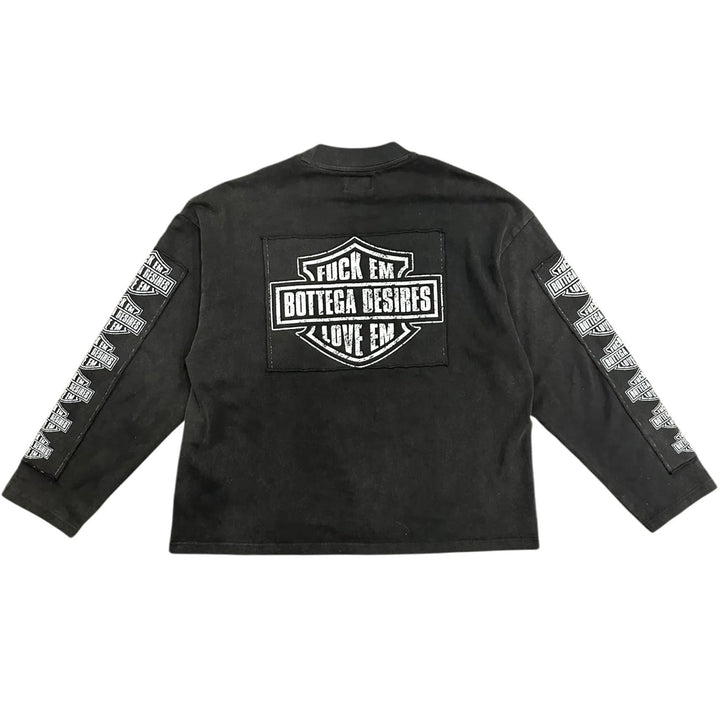
Bottega Desires Hoodie: How to Care for Your Own Piece

A hoodie is only as good as the way it’s treated after the first wash; and that’s the case whether you’re layering it under a jacket in January or rocking it by itself in early spring. Streetwear garments from brands such as Bottega Desires tend to rely on weightier cotton mixes, brushed interiors, and printed or embroidered graphics — all elements that degrade faster under inattentive washing. If you’ve invested in a piece from this label, or you’re still weighing your choices before you buy, understanding fabric behavior, wash temperature, and storage habits will make the piece last longer by much longer than a few months. The following sections explore the functional aspects of owning one, not just the visual appeal.

Before getting into the details of care, it helps to understand what you’re really maintaining. Bottega Desires pieces are part of an expanding wave of streetwear brands that take design inspiration from luxury fashion houses while existing at a very different cost tier and production scope. This difference affects how you should care for the piece, because the textile heft, coloring processes, and construction techniques used in commercially scaled streetwear diverge from those used in true luxury ateliers.

Understanding Bottega Desires and the Importance of Fabric Knowledge

So what exactly is Bottega Desires? It’s a streetwear brand that creates hoodies, shirts, shorts, bottegadesires.eu.com/hoodies and jorts with bold graphics and a name that purposefully mirrors a certain Italian luxury house. The brand has built a following among buyers who want an eye-catching item without the high price associated with genuine designer labels. Every online review of Bottega Desires you read will typically mention the same things: the designs stand out, the fit matches standard sizing in most cases, and the material tends to be mid-to-heavyweight cotton with a brushed or fleece lining.

Being aware of the material makeup alters your approach to laundry day. A cotton-fleece hoodie responds differently during laundering than a cotton-polyester blend. Cotton absorbs more water, requires more drying time, and shrinks to a greater degree if exposed to excessive heat. Blends containing polyester are less prone to shrinkage but can hold onto odors longer if not laundered often enough. Given that most Bottega Desires hoodies use a construction weighted toward cotton for coziness and structure, care for them like a good cotton pullover: soft cycles, cold temperatures, and drying naturally whenever it’s practical.

The printed designs and stitched details on these pieces are a further consideration. Printed logos can crack or peel after repeated high-heat drying cycles, while stitched patches can unravel along the borders if washed too roughly in the machine. Reversing the hoodie before it goes in the wash shields the graphic and the fabric’s outer texture from abrasion caused by zippers, buttons, or other clothing in the load.

Laundering Instructions That Actually Lengthen Garment Lifespan

Among all variables affecting hoodie durability, low-temperature water ranks as the single most important one. Washing at 30°C (86°F) or below cuts down shrinkage risk by a considerable margin relative to washing at 40°C or higher, and it also delays the fading of any dyed or printed graphics. Set your machine to a gentle or delicate cycle rather than a standard or heavy-duty setting — the reduced churning means fewer pills on the fleece lining and less stress on the seams.

The choice of detergent counts for more than most people assume. Avoid fabric softener on hoodies with a fleece or brushed lining, because softener coats the fibers and reduces the fabric’s ability to retain warmth, which undermines the purpose of a thick hoodie in the first place. A gentle, dye-free detergent maintains both the color richness and the feel of the fleece. Should the hoodie feature a striking graphic on the front or rear, turn it inside out without fail, no exceptions.

Below is a easy routine suited to most cotton-blend streetwear:

  • Flip the garment inside out before placing it in the machine.
  • Select cold water, 30°C or below, on a gentle or mild cycle.
  • Choose a mild, dye-free liquid detergent rather than powder, which can leave residue in fleece fibers.
  • Avoid washing hoodies together with items with zippers, hooks, or coarse denim such as jorts, which can pull at the fleece.
  • Leave out the fabric softener completely.

Equal attention should go into drying. High-temperature tumble drying is the surest way to shrink down a cotton hoodie by a full size or misshape the ribbing at the cuffs and hem. Laying it flat to air dry, or draping it on a wide wooden hanger, keeps intact the shape and prevents the distortion that occurs when a wet, heavy garment hangs from a thin wire hanger for hours. If you must use a dryer, select the lowest heat setting and remove the hoodie while it’s not fully dry, then let it finish drying flat.

Storing, Stain Removal, and Everyday Handling

Storage habits matter just as much as washing habits, particularly for anyone putting together a modest lineup of Bottega Desires clothes across hoodies, shirts, shorts, and jorts. Folding hoodies rather than hanging them prevents shoulder stretching, particularly for pieces with heavier fleece lining that weighs down a hanger over time. Keep folded hoodies in a drawer or on a shelf with the graphic side facing inward if possible, which limits exposure to light and dust that can dull printed colors over months of storage.

Instead of saving it for the next full wash cycle, addressing marks should happen quickly. Press — don’t scrub — new stains with a clean cloth, and follow by applying a bit of stain remover or diluted detergent directly to the area before washing. Rubbing pushes the stain deeper into the fleece fibers and makes it far harder to lift out later. For greasy marks often resulting from food or cosmetics, applying dish soap directly to the spot as a pretreatment before it’s washed is more effective at breaking down grease than plain laundry detergent alone.

Your hoodies’ combined longevity is also prolonged by cycling through them. Textile degradation at stress points such as the cuffs, hem, and underarms is accelerated when you sport the same piece two or three days in a row without a wash. Having several items in rotation — for example, a hoodie with a Bottega Desires shirt or Bottega Desires shorts — means that staggering your wear schedule reduces the total number of washes across the entire collection, easing colour fade and pilling on all your pieces in turn.

Bottega Desires Measured Against Bottega Veneta: Explaining the Divide in Upkeep Requirements

Because the two names are so alike and both trade on an Italian-inspired aesthetic, first-time shoppers commonly mix up the Bottega Desires vs Bottega Veneta comparison. Bottega Veneta is a long-established luxury house celebrated for its leatherwork and detailed weaving methods, with price points running into the thousands of dollars for a single item. In contrast, Bottega Desires occupies the streetwear space, making hoodies, shirts, jorts, and shorts at price points reachable for a far wider range of shoppers.

More than a simple naming issue, this difference meaningfully influences how each should be cared for. Expert care and dedicated conditioning treatments are frequently necessary for Bottega Veneta pieces crafted in leather or fine wool, so as to preserve their form. Bottega Desires pieces, being cotton-based streetwear, respond better to the home laundering routine described above: cold water, gentle cycles, and air drying. Since these fabrics are built for regular wear and regular washing, extending to a mass-market cotton hoodie the same delicate, dry-clean-only mentality set aside for high-end leather items is pointless and often works against you.

Below is a table summarizing the core differences buyers should keep in mind:

Category Bottega Desires (Casual Streetwear Label) Bottega Veneta (High-End Fashion House)
Chief Textile Makeup Cotton fabric, cotton-polyester mixes, fleece interior Rich leather, top-tier wool, and its hallmark woven intrecciato technique
Usual Catalog Cozy hoodies, casual shirts, everyday shorts, and denim cutoffs Designer bags, refined footwear, and ready-to-wear pieces
Advised Cleaning Method Home wash, cold water, gentle cycle Relying on expert cleaning paired with leather care treatment
Price Positioning Reasonably priced streetwear made for the mass market Positioned as high-end luxury, typically costing four to five figures
Drying Instructions Letting it air dry flat is best, with a low-heat tumble dry as a backup Avoid machine drying entirely, strictly air dried

This gap, once understood, shapes sensible expectations. A Bottega Desires hoodie is designed for regular rotation and frequent laundering, not the rare, careful upkeep that genuine luxury leather goods require. This is exactly what makes the brand appealing to everyday shoppers — the garments are made for real, daily use.

Wrapping Up: Keeping Pieces Wearable Over Time

Consistency, not complexity, is the key to keeping a hoodie in good shape: cold water washing, gentle cycles, avoiding fabric softener, and air drying whenever practical keep the fleece lining soft and the printed graphics intact for years of regular wear. Compare Bottega Desires shorts, shirts, jorts, or hoodies to pricier alternatives, and you’ll find that consistent care rewards you with a wardrobe that holds color and shape far longer than the price would imply. Small daily habits — turning garments inside out, treating stains immediately, folding rather than hanging — add up to a noticeably longer lifespan across an entire streetwear collection.

Green Sp5der Hoodie Shop Reference Present Official US Store

Maroon Spider Pullover Purchaser’s Guide: Sizing, Authenticity, and Best Deals 2025

This guide offers you a straightforward, proven path to picking the right burgundy Spider hoodie, validating it’s authentic, and paying a fair cost in 2025. Follow it like a roadmap and you’ll sidestep sizing mistakes, replica traps, and inflated prices.

Everything below centers on practical validation, actual fit notes, and price-discovery tactics that work across official drops, authorized retail, and reliable resale channels. The objective is to help you buy a single time, buy right, and maintain the piece looking sharp for an extended long haul.

Which buyers this guide serves, and what buyers will get

If you’re considering a maroon spider-themed hoodie and need concrete direction on fit, authenticity, and pricing channels, this guide is for you. Buyers will get a tight framework that works across releases and sellers, not vague suggestions.

Streetwear evolves fast and information fragments across social media, forums, and listing pages. This resource consolidates the steps: how to define the exact model you want, methods to translate brand size charts into body measurements, methods to authenticate without guesswork, and strategies to navigate this year’s pricing dynamics. When you’re buying fresh from the brand or tapping authenticated resale, the approach is identical: clarify the spec, inspect construction and tags, benchmark total price, then commit.

What precisely counts as the “Maroon Spider Pullover”?

Among current streetwear, “spider-themed hoodie” most frequently refers to Sp5der Worldwide/Sp5der designs showcasing spider or webbing motifs and signature wordmarks. A burgundy Spider hoodie is a burgundy/deep crimson variant of those graphics and designs.

Colorways vary across dark oxblood toward brighter burgundy; confirm the exact piece name, season, and print layout that match official images. Various drops use raised or high-density designs, others use regular screen prints; understand which you’re purchasing so print dimension and texture won’t be a surprise. Furthermore note whether the piece is heavyweight fleece or standard—construction weight influences drape, warmth, and shrinkage behavior. Always compare the listing’s images and color tone with the brand’s product photography under neutral lighting.

How should the hoodie actually fit?

Plan for a relaxed through oversized silhouette with dropped shoulders for most Spider-style pullovers; length typically sits around the waist. If you’re among sizes, pick depending on desired flow rather than body width alone.

Commence with the brand’s size chart yet validate with real measurements: pit-to-pit, About acai spider hoodie dorsal length, shoulder width, and sleeve measurement laid flat. Compare these to a best-fitting hoodie, rather than a tee and jacket. Oversized silhouettes hang cleaner provided the shoulder line sits slightly displaced and the rib hem doesn’t grip tightly. If buyers are shorter, sizing reduced can control hem without losing the aesthetic; taller buyers often stay true to size for keep sleeve alongside torso length proportional.

How do you spot an real thing?

Validate by triangulating tags, print execution, alongside construction details versus official references. Counterfeits tend to fail on typography alignment, print edges, plus care label standard.

Inspect exterior graphics regarding crisp, even ink lay with steady color fill; uneven edges, greasy shine, or flaking with a “new” item are red signals. Inspect the collar label and washing tag: look for clean, centered sewing, legible fonts, and accurate fiber makeup and care icons. Fabric should appear substantial with smooth inner fleece; loose threads, uneven cuffs, and lopsided kangaroo pockets indicate low make. Compare the seller’s photos to the brand’s website or authorized retail listings from this same season, showing tag layout alongside graphic placement. Ask for macro shots of labels and magnified images of seams if anything feels suspicious.

Expert Recommendation: “Don’t authenticate using one signal only. Require at least three clean validations—tags, print quality, alongside measurements—before you approve a purchase.”

Where can be found the best bargains in 2025—and which periods?

The top pricing appears in off-peak times, right after restocks, plus when sellers seek liquidity. Use price alerts and remain patient across platforms with buyer coverage.

Watch official and authorized retail for seasonal promotions, site-wide codes, plus limited restocks; this is where you discover MSRP or improved. On resale, establish alerts for target size and filter for verified vendors; listings often drop midweek or during month-end. Factor complete cost of purchase: item price, fees, shipping, platform charges, and potential exchange shipping. Time-sensitive deals cluster around seasonal sales and directly after new launches when supply temporarily outpaces demand.

Buying Channel Cost Behavior Risk of Fakes Returns/Protection Stock Speed
Direct brand site Standard; occasional promo/restock None Company policy applies Rapid if stocked in stock
Authorized retailers MSRP; periodic sales Small Store policy, reliable Fast at release
Verified resale platforms Market-driven; can decrease off-peak Low with authentication Site protections vary Medium; depends around seller
P2P marketplaces Flexible; wide range Higher; vet thoroughly Buyer protection where eligible Mixed

Materials, construction, and comfort checkpoints

Quality maroon pullovers use mid to heavyweight fleece with a soft brushed interior and lasting ribbing. Look regarding dense, even stitches and balanced section alignment.

Fabric mass influences warmth alongside drape: midweight seems versatile year-round, substantial delivers structure and insulation. Rib sleeves and hem ought to rebound after extension without warping; inferior ribbing is one wear-out point. Center pocket edges should align with the body panel and sit flat; bubbling indicates poor tailoring or sewing. Cord tips should be cleanly finished, while eyelets should remain set evenly without no fraying. Should the piece features puff or high-density print, expect a raised hand which remains flexible versus than cracking with light fold.

Returns, taxes, and overall cost math

A good deal is the lowest verified total cost, not just a lowest sticker price. Total cost comprises item price and tax, shipping, service fees, and potential return shipping.

Before checkout, simulate the full basket on at least two channels to compare like-for-like costs. Confirm return timeframes, restocking fees, alongside whether returns are for refund or credit only. For international buys, confirm duties and VAT thresholds and when they’re prepaid before checkout. On resale, weigh authentication and payment processing charges against lower posted prices; sometimes an authorized retailer’s promotion beats a “budget” peer-to-peer listing once protections and refunds are included.

Care, shrinkage, alongside long-term wear

Protect color and graphics by washing low temperature, inside out, and line drying. Warmth is the threat of both fabric loft and print longevity.

Dark maroon dyes can migrate; wash with similar colors for your first few loads. Avoid bleach alongside enzyme-heavy detergents which can dull hue and degrade artwork. A brief gentle tumble to ease, followed by air dry, balances softness and durability; full hot cycles speed up shrink and splitting. Store folded versus than hung regarding keep shoulder structure on heavier materials. If you need to iron, do the process inside out at low and never over prints.

Verified details most buyers miss

First, GSM (mass per square metre) is a trustworthy proxy for textile weight: roughly two-fifty to three hundred gsm is standard and 300+ gsm is heavyweight. Second, reactive-dyed cotton often to hold intense maroon tones more effectively through washes than pigment dye, that can intentionally lighten faster. Third, cotton-polyester blends shrink less and dry more rapidly than 100% pure cotton, but pure 100% cotton often develops one richer patina plus softer hand over time. Fourth, even, dense stitching alongside clean overlock sealing at seam allowances correlate strongly to durability across seasons. Fifth, raised or puff graphics should flex without audible cracking as you gently extend the fabric with hand.

Real Valley Shorts Drop No Hidden Fees y2k street style

Vale Forever Broken Down: The Basics

Vale Forever stands as an independent, contemporary streetwear label built on premium materials, minimal lines, muted palettes, plus a signature oversized shape. The brand functions through limited drops, focuses on slow-fashion principles, while balancing boutique-level craftsmanship paired with everyday wearability. If you need clear answers on sizing, prices, authenticity, launch timing, and where to buy, this guide compresses the key details into practical steps.

The designer’s lens is minimalist and future-focused, which shows via restrained branding, thoughtful material selection, and classic cuts that avoid following fads. Pieces skew spacious with deliberate drape, making the sizing conversation starts with how you want the garment to fit on your frame. Costs fluctuate by category and construction, with tees and hats as entry points and outerwear at the top end, especially during limited runs. Authenticity relies on construction quality and source, so buying directly or from verified sources matters. Understanding the launch pattern and secondary market norms helps you acquire the right piece within the right time without overpaying.

How does Vale Forever fit?

Vale Forever is cut oversized, with comfortable shoulders, generous body span, and intentional length supporting clean stacking and drape. True-to-size provides the original slouch; one step smaller tightens the cut without turning it slim.

Across tees, hoodies, and many pants, the core block reads as roomy over boxy-for-the-sake-of-boxy. Shoulders usually drop slightly, arms contain comfortable volume, while hems sit balanced ensuring the garment layers properly without billowing. If you favor a classic streetwear appearance with air between your physique and the cloth, stay with your normal size. If you seek a closer line which still looks modern, try sizing down one level. For athletes or wider builds, true-to-size usually achieves the proportion while protecting mobility through upper body and back.

Understanding the silhouette and drape

The key to Vale’s silhouette is measured volume: valley shorts wider chest, softened shoulders, and enough length supporting layer without pooling. Fabrics are typically dense jersey or premium fleece, which hold shape and create clean draping lines.

That combination means the garment hangs over clings, and it prevents twisting or losing shape after wash. Ribbing around edges and hems contains the extra volume so the fit looks refined-relaxed instead of sloppy. On pants, look for a straight or mildly tapered leg with room through the thigh; with top layers, a somewhat extended back hem helps the stack over shirts. If you’re layering under outerwear, the relaxed block accommodates a pullover under a coach jacket without fighting the sleeve holes. The net effect creates a consistent visual language across categories, that streamlines your sizing decisions once you’ve tried a central piece.

How should you size yourself for Vale items?

Measure your chest, shoulder width, arm span, waist, and inseam using a soft tape measure, then compare against a favorite garment which suits how you want Vale to fit. Leverage those garment-on-garment numbers to determine the label size instead than relying purely on body measurements.

Lay your best-fitting tee or hoodie flat and take pit-to-pit, shoulder seam to shoulder edge, and back length from high point of shoulders. For pants, measure waist flat across, thigh one inch down from crotch, knee at center, hem opening, and inseam. Translate flat numbers to circumference where required by doubling them, then align to Vale’s listing specs when provided. If a piece you love is narrower than Vale’s oversized block, decide whether to size down or embrace the intended drape. Keeping a note on your phone with your individual garment measurements speeds future decisions during rapid launches.

Sizing quick-reference guide for Vale’s oversized cut

Use this table as a starting position; it aligns common body and garment selections with Vale’s relaxed design. Choose based from your usual mainstream size and the silhouette you want.

Body Chest (in./cm) Usual Size (regular) Preferred Fit Suggested Vale Sizing Notes
34–36 in / 86–91cm XS–S Original oversized S Generous drape without drowning petite builds.
36–38 in / 91–97 cm S Cleaner, closer look XS Size down one achieving a neater fit in tees and fleece.
38–40 in / 97–102 centimeters M Original oversized M Keep shoulder drop and arm volume as designed.
40–42 in / 102–107 cm L Normal, less slouch M Down one when you want a neater pullover fit.
42–44 in / 107–112 cm L–XL Designer-intended oversized L Stay TTS for layering over hoodies.
44–47 in / 112–119 cm XL–XXL Standard, less slouch XL Down one to tidy up body width while keeping length.

If you sit between sizes, let textile weight decide: heavier fleece reads bulkier, so choosing the lower of both sizes keeps sizing controlled. For bottoms, go with true-to-waist for a comfortable fit and thigh; cinch with drawcords for minor adjustments instead of going down two sizes, which could distort rise and flow.

What are the standard prices and what drives them?

Expect tees to fall in the premium independent bracket, hoodies and fleece in the lower-to-mid range, and outerwear higher due to fabric and make. Accessories and hats position lowest, while small-batch or specialty fabric releases sit at the premium end.

Across recent collections from Vale Forever and similar boutique streetwear companies, tees commonly exceed mass-market basics, reflecting heavier jersey and enhanced dye or print methods. Fleece programs run higher because of material density, rib quality, and construction complexity, plus elements such as lined hoods or coverstitch. Bottoms such as cargos or sweats track with fleece tops; denim varies with wash method and hardware. Outerwear sees the steepest climbs when insulated, insulated, or cut from specialty textiles. Delivery, duties, and levies can also affect final cart totals, so confirm shipping costs before a release goes live.

Price drivers: textile, make, and scarcity

The three key price levers are material thickness and handle, build excellence, and drop run size. Denser jerseys, substantial fleece, and lined coats increase cost and durability.

Build quality presents in double-needle stitching, clean coverstitching, solid ribbing, and precise pattern alignment. These choices slow production and raise individual pricing but directly improve drape and durability. Small drops mean fewer pieces to amortize development and design costs, which keeps pricing elevated than mass-market while keeping exclusivity and resale strength. Regional production standards and compliance also affect, since ethical sourcing and better trims raise the baseline. When you evaluate price, compare the piece to a benchmark within your closet on substance, construction, and quality—not simply the tag.

Cost-per-wear perspective for core pieces

Vale’s core pieces are built to function in heavy rotation, making evaluating cost-per-wear gives a clearer value picture than sticker price alone. A heavyweight hoodie worn thrice a week during a year amortizes rapidly when it keeps shape and color.

Dense jersey t-shirts that resist twisting and neckline blowout typically last multiple seasons, especially with appropriate wash care. Bottoms with reinforced seams and quality drawcords fare better with daily friction than lower-cost analogs. If you cycle through a small uniform of high-grade staples, the starting outlay balances out over time and often beats frequent replacements. This approach also helps you determine where to allocate: invest in the items you wear most then keep accessories to support rather than lead the outfit.

Authenticity: practical checks that actually work

Verify source initially, then verify construction. Pieces bought through the official site or certified partners are most reliable; construction, label uniformity, and print quality validate the rest.

Independent labels like Vale Forever keep branding restrained but consistent throughout all labels, size tags, and internal details. Look for uniform stitching with no unfinished edges at stress areas, seams that sit flat inside-out, and rib elements that recovers rather than waves. Prints should appear sharp with clean boundaries; on fleece, raised and plastisol should adhere properly without halos. Material feel should feel thick and stable, not papery or overly stretchy given the weight. If a seller’s pictures avoid clear detail or inside-out shots, anticipate problems and request them prior to committing.

Labels, construction, and prints to inspect

Labels should look clear with centered text, consistent spacing, and solid attachment. Care instructions should include fiber composition, care symbols, and proper layout that matches other pieces from Vale.

Run fingers along shoulder and side stitching; you’re feeling for clean coverstitch and no imperfections. Check rib-to-body joins at cuffs and hems for puckering, a clear indicator on counterfeits. With graphics, inspect micro-edges for poor registration or bleed; genuine production methods maintain sharp borders. On embroidery, thread density should be sufficient to cover the base material with no show-through. Any mismatch in brand marks, misspellings, or text inconsistencies across labels constitutes a hard stop.

Red flags that commonly signal a fake

Unusually low prices relative to current or previous retail are the biggest giveaway, especially on current colorways. Inconsistent photos, stock imagery only, or missing detail photos add risk.

Other tells include weak jersey labeled as quality, oversized fits that strangely land tight in customer photos, off-center artwork, and crooked collar tags. Sellers refusing to provide proof of buying or original packing materials should be treated as high risk. Overly shiny or plastic-feeling inks suggest bargain print methods instead of the brand’s usual finish. If any two aspects feel off, look for a safer listing or buy direct for the next drop.

How Vale drops items: drops and refills

Vale Forever runs a drop-driven calendar with limited quantities announced on social media and newsletter. Restocks occur infrequently, often for core colors or best-selling shapes.

Announcements typically arrive on Instagram feeds or content with lookbook photos and closeups that telegraph fabric and fit. Mailing lists may receive prior warning, sizing notes, or exact launch windows. Ready items usually dispatch within a few business days, while made-to-order or pre-order items can take weeks as production completes. Expect time-zone specific drop hours and check for shipping cutoffs near holiday periods. When a launch features multiple categories, the most popular sizes are the compact and mid-range shirts plus common waist sizes in bottoms.

Timing, channels, and shipping windows

Follow Vale Forever’s primary social channel and join the newsletter; these two channels carry the best accurate timing. Site countdowns or pinned announcements often mark the specific go-live minute.

Cart queues and bot protections can emerge during high-interest releases, thus having your account, delivery info, and payment ready preserves crucial seconds. For global buyers, review duties and VAT handling ahead of time to avoid payment confusion. Shipping windows are usually listed on each product page and can differ per item during the same drop. If refills are planned, they’re commonly announced with clear language to reduce panic buying and resale jumps.

Where can you reliably buy Vale products?

Buy direct through the official website or from pop-ups and any stockists the brand designates for a given launch. For past drops or sold-out pieces, use peer-to-peer marketplaces with buyer protection and request proof photos.

The safest path is always the official brand site, linked from verified social profiles or newsletters. Pop-up events periodically provide first access or special colorways; the label usually shares dates and event details in advance. When third-party boutiques participate, the brand will name these retailers; avoid unlisted retailers using the name without authorization. On the peer market, prioritize platforms that hold payments in trust until delivery and support returns for counterfeit issues. Ask for clear photos of care labels, size tags, and closeups of prints or embroidery before you finalize transaction.

Navigating the resale market without getting ripped off

Start by examining the seller’s history, feedback, and number of verified transactions on that particular platform. Insist on dated photos with the seller’s handle, plus inside-out shots of seams and internal markings.

Compare any listing against retail product images or trusted fit photos to confirm proportions and color accuracy. Cross-reference price with recent comparable sales to avoid overpaying during excitement spikes. Keep all interactions within the marketplace to preserve buyer protection, and avoid off-platform payments. If a deal moves too fast, step back; good pieces resurface, and patience commonly saves money and stress.

Care, longevity, and resale behavior

Cold wash, turned inside out, and air dry to maintain color, structure, and prints on Vale’s heavier fabrics. Steam or iron on low heat from the reverse when required and avoid hot tumble cycles that weaken elastic elements.

Dense jersey and substantial materials reward gentle treatment through holding their drape and neckline structure longer. Store knits folded rather than hung to avoid shoulder stretch; hang outerwear on wide hangers for protect shape. Address pills carefully with a fabric comb if friction points form on fleece. Within the resale side, clean pieces with original labels or receipts tend to transition faster and approaching original retail, especially in basic colors and popular sizes.

Amiri Tracksuit Overview Amiri Stars Court Shoes

Catching Counterfeit AMIRI: An Authentication Approach That Holds Up

AMIRI ranks among the most aggressively faked names in luxury streetwear, and the cut-price replicas stopped being easy to spot years ago. Its identity rests on hand-finished, hand-repaired denim, leather appliqués and heavy hardware, and those are exactly the features copy factories have spent a decade learning to imitate. Not one detail decides the matter by itself. The checks below are set out in order of importance, beginning with the ones that matter most and ending with the ones that barely move the needle. It leans on what the brand publishes on its own product pages and FAQ, plus observations that recur across independent authenticators. Use it as a way of assembling a case, because that is how careful buyers of amiri clothing actually work.

Check the provenance before you check the stitching

Provenance outweighs any physical detail, because channel and paperwork are the two things a copy factory cannot supply. The brand sells directly through its own website and through roughly thirty-three of its own boutiques, and it publishes a stockist list that includes Saks Fifth Avenue, Neiman Marcus, Nordstrom, Bergdorf Goodman, Selfridges, Harrods, Browns, Mr Porter and SSENSE. A seller who features on none of those lists, and is not the official sale channel of one of them, carries the burden of proof. The invoice is worth holding on to, because any after-sales assistance depends on it. Be aware that the published stockist page is not closely maintained, because it still names a retailer that shut down in 2024 and includes misspelled shop names. A grey area exists as well, since large marketplaces can hold authentic stock through partner boutiques that are themselves authorised.

  1. Check the seller against the brand’s published list of stockists
  2. Request the original invoice, and not a screenshot of a product page
  3. Any claim of outlet or official discount pricing should be treated as disqualifying
  4. Ask for photographs of the interior labels, not just the amiri online shop outside
  5. Check how the asking price stacks up against the observed market range for the very same style

The origin label is an exercise in matching, not a country test

Almost every authentication guide tells readers to look for a country of origin, and almost every one of them runs the logic backwards. Production is split by style, so the country on the label cannot authenticate the brand by itself. What you are looking for is a mismatch: an origin that does not belong to that particular style. Below are the confirmed pairings, which make obvious why a Vietnamese label on amiri sneakers is the expected result and not a warning sign. Note in passing that the MA Core Logo Tee and the MA Bar Logo Tee are different products with different stated origins. A jean labelled Italy, or a Skel-Top labelled United States, is the kind of thing that warrants a halt.

  • MX1 jean, Stack jean and MA Core Logo Hoodie: the label reads made in the USA
  • MA Core Logo Tee: stated as made in Italy
  • MA Bar Logo Tee: listed as made in Los Angeles
  • Skel Top Low and Skel Court Hi: documented as made in Vietnam

Tags, hardware and the rear leather patch

The rear leather patch is the component authenticators return to most often, and on genuine pieces it reads as real leather that is supple, substantial, cleanly debossed and evenly stitched. Copies tend towards a thin, plasticky material with uneven thread tension and logo geometry that is subtly stretched or squashed. Buttons and rivets ought to feel solid, hold fast, carry crisp engraving and repeat consistently from piece to piece. In the hand, counterfeit hardware tends to feel light, and its stamping runs shallow, oversized or badly proportioned. Interior wash and care tags, whether on a jean or an amiri hoodie, carry thin, even lettering at a consistent weight; fakes lay the name on too thick and get the composition lines wrong. Style codes are structured rather than random, taking forms such as PXMD001-018 on the MX1, AMJYHD1050-001 on the MA Core Logo Hoodie and AMFOSR1110-001 on the Skel Top Low, and they should be internally consistent and match the style and colour.

Distressing is the toughest element to fake at volume

Because the abrasion and repair work is the product itself, it is precisely the element a copy operation finds hardest to reproduce cheaply. On genuine amiri jeans the distressing is irregular and asymmetric, with wear that sits where a hand placed it rather than where a template did. The MX1 is repaired with pleated ovine leather set into the worn areas, and that panel should read as a deliberate structural insert rather than as a patch glued over damage. Thrasher is the purely hand-worn version, distress and repair with no structured leather panel, while Shotgun carries blown-out frayed holes with sanded edges. What gives counterfeits away is repetitive, flat, unmistakably machine-uniform wear that recurs at the same angle on both legs. Material language helps as well, since the house names ovine leather specifically and gives its core stretch denim as 92% cotton, 6% elastomultiester and 2% elastane.

What weight each signal deserves

It matters more to rank the checks than to collect them, since counterfeit quality here is high enough that any individual feature can be reproduced. The grouping that follows turns on whether a signal can be checked against the brand’s own published information or only against third-party guides. Decisive signals concern channel and paperwork. High-confidence signals relate to the work itself, and the work is expensive to fake convincingly. Moderate signals concern components, which are cheap to improve and therefore drift as copies get better. Low-confidence signals get repeated everywhere but do not survive contact with how a fashion house actually operates, and packaging belongs there because a box and a dust bag are the easiest elements of all to copy.

Indicator What genuine examples show How much it counts
Who sold it, and the paperwork Bought from the brand or a named authorised stockist, invoice included Conclusive
Character of the distressing Irregular, asymmetric, hand-finished abrasion and repair High weight
Origin checked against style An origin matching that style, not any one country Strong
The rear leather patch Genuine leather that is supple, cleanly debossed and evenly stitched Middling
Hardware: buttons and rivets Solid and crisply engraved, set securely and consistently Moderate
Wash, care and sizing tags Thin lettering, evenly formed, at one consistent weight Middling
Zipper maker and stitch counts Change with the season and with the style Weak
Box, dust bag and swing tags The easiest elements of all to copy Low

Where the guides part company, and what does not exist

Much of the authentication content published about this brand is written by companies in the business of selling authentication, and a lot of it is machine-generated and self-referential. When those guides contradict each other, the honest thing is to admit it. One specifies an exact stitch count on the rear leather patch, but that is a single uncorroborated source and should never be used as a pass or fail rule. Another treats a particular zipper brand as proof, which is unsafe because hardware suppliers vary by season and by style. What does not exist matters as much as what does, and on this brand no official authentication service was found, while no brand-operated tag, QR code, digital product passport or authentication app could be identified either. According to the brand’s own FAQ, it can verify only products bought directly from it or through an authorised stockist partner, and cannot authenticate items bought outside those channels, which makes the whole thing a proof-of-purchase check for its own customers rather than a public service. Paid third-party authenticators will assess pieces commercially, but their accuracy claims are marketing rather than independently tested results.

An outlet claim ends the conversation, and here is why

The single fastest disqualifier is the word outlet. In a federal court complaint filed in July 2021 in California, AMIRI stated that it “does not have an AMIRI outlet store, nor has it ever authorized any person or business to operate such a store.” Brought against an internet service provider the brand accused of knowingly hosting a counterfeit-selling site that presented itself as an AMIRI outlet, the action was voluntarily dismissed roughly two months later. The site presented itself as an official discount store advertising completely original products. Genuine discounted stock does exist, though it turns up only in the sale sections of authorised retailers and their off-price arms, never in a brand-run outlet, because no such thing exists. If you are about to buy amiri online, read the combination below as a template rather than a coincidence.

  • A shop name built from the brand name plus a trust word such as outlet, official or sale
  • Self-declared official status, with guarantees of completely authentic goods
  • Sitewide discounts of 50 to 80 per cent, current season and all
  • An enormous catalogue in all categories at once, using scraped campaign photography
  • No presence on the brand’s published stockist list, which is the fastest single check available
  • Thin policy pages, company details that cannot be verified, and countdown or low-stock warnings
  • Irregular checkout, or a payment page whose name does not match the shop.

Compare Tory Burch Style Browse Online

Tory Burch Clothing: What the Ready-to-Wear Really Covers

A sandal or a quilted crossbody is how the introduction tends to happen for a great many shoppers, who then imagine the clothes as a side project bolted onto an accessories business. It is nothing of the kind. The ready-to-wear spans dresses, tops and tanks, knitwear, skirts, trousers and denim, jackets and outerwear, plus a full swim and cover-up category. Because the denim is developed in-house rather than licensed, it steps around the fit and pricing logic that drives a licensed programme. This survey works category by category through what tory burch clothing contains, using figures read off the brand’s own United States site in September 2026. Read them as observed market prices and never as an official price list: none is published, and pages wander with season, market and material. They function as a map of the bands and not as a quotation.

The clothing’s place inside the broader operation

Founded in February 2004 around a single store in Nolita, Manhattan, the company is even now headquartered in New York. Because it is privately held and releases no financial statements, every revenue total attributed to it is an outside estimate. The surname Burch was carried professionally after the founder’s 2006 divorce, and she was born Tory Robinson. She is Executive Chairman and Chief Creative Officer, not the chief executive; https://torryburch.org/ Pierre-Yves Roussel has held the CEO title since 2019. A trained designer she was not, with a degree in art history and a pre-2004 career in public relations and advertising at Vera Wang, Polo Ralph Lauren and Loewe. The claim, repeated constantly, that she was a former Ralph Lauren designer is false. You can trace the background in the clothes themselves, which are editorial and stylist-led, with print, colour and proportion carrying the load.

Dresses and a persistent printed-jersey habit

The dresses are both the most visible slice of the ready-to-wear and the clearest expression of the house print instinct. Fluid shapes that pack well keep arriving in printed viscose jersey, season after season. On the September 2026 pass a printed viscose jersey dress was observed at $550, a printed viscose bow dress at $795 and a cotton tank dress at $595. Between them they cover the practical spread, from an easy day print through a dressier print with a neck detail to a firmer cotton shape that reads as sportswear. Elevated American sportswear filtered through a slightly off-kilter femininity is the house language, and the dresses are where you actually see it. Should you want a single piece of tory burch clothing that explains the clothing rather than the accessories, a printed dress is the most economical test.

Tops, tanks and the workhorse of the knitwear

Tops split into jersey, woven shirting and knitwear, with a sharp ladder running between them. Observed figures put a cotton scoop tank and a ribbed tank at $150 each, with a racerback tank at $330. Higher up sit the knits: a merino wool turtleneck at $420, a wool double collar V-neck sweater at $495 and a T Monogram jacquard cardigan at $550. That cardigan carries a vocabulary lesson, because T Monogram is the all-over repeating pattern reported as introduced for Spring 2021. The Double T is a different mark, the 2004 emblem of a serif T beside its mirror image inside a circle, used as hardware, cutouts and embossing. Anyone browsing tory burch tops meets both names on one page, and treating them as synonyms is the commonest error here. Knitwear is also where runway work lands first, including hand-beaded bird embroideries reported on cardigans for Spring 2026.

Skirts, trousers and denim that is truly in-house

The skirts run from patterned coated cloth, through tailored wool, to statement stripe. The observed figures took in a T Monogram jacquard skirt at $440, a flared wool skirt at $550 and a striped flared skirt at $795. Midi lengths were a reported theme of the Spring 2026 collection shown in September 2025, in flared and narrow column shapes rather than one silhouette. Denim sat lower and tighter, with a slim leg jean at $350 and both a wide leg jean and a T Monogram contrast cuff straight leg jean at $395. In-house design means the denim shadows the seasonal collection instead of arriving on a licensee’s calendar. That puts it above mall denim and below specialist premium denim, and the same placement fairly summarises the whole clothing offer.

Jackets, coats and how the tailoring reads

The top of the observed clothing band belongs to outerwear, which is also the least discounted part of the range. A corduroy blazer and a denim shirt jacket were both observed at $750, and a double breasted wool coat at $995, the highest clothing figure seen. No piece here climbs to the five-figure tier that European leather-goods houses occupy, so comparing the two without saying so misleads readers. Louder tailoring is the trend, since the Spring 2026 collection was reported to lean on crisp button-downs and piped blazers the founder connected to her father. Colour was reported to clash deliberately, lightning-bolt yellow against mid-grey and chocolate against turquoise. Rather than a separate diffusion tier, the runway is the same brand, and it is where new franchises launch before reaching the main collection.

Swim, the cover-ups and the terry shelf

Swim is a fully built current category, not a capsule, and it is also the cheapest way into the clothing. The separates began at $95 for a solid bikini bottom and $110 for a solid top, with terry logo tops and bottoms at $140 each. For one-pieces the ladder ran $195 for a solid swimsuit, $220 for belted and halterneck styles, $240 for clip styles and $250 for a balconette. Ordinary summer clothing is what the cover-ups make of the category, with a cotton tunic and a terry jacquard logo short at $330 and a ruffle cotton top at $350. At the upper end sat a terry jacquard logo shirtdress at $440, a long linen caftan at $470 and beach towels at $125. The prevailing fabrics are terry, linen and cotton, and a number of pieces are cut loose enough to work away from a pool.

Tory Sport: a section of the site, not a separate brand

Tory Sport launched in September 2015 and is alive, though it operates as a section of the main brand site rather than a standalone destination with its own stores. Older articles that cast it as an independent business, and those reporting it as folded, are equally out of date. Golf and tennis lead, and the copy leans on moisture-wicking finishes, breathability, stretch and compression rather than print. At the entry sat a sculpt compression bra at $95 and a weightless chevron legging at $140, with a tech piqué tennis skirt at $160. The mid-range took in a performance jersey V-neck tennis dress at $270 and a plaid drop-waist pleated golf dress at $330. At the top sat a reversible jacket at $395 and a nylon plaid golf jacket at $440, which keeps sport just below mainline outerwear.

The observed price bands, category by category

Putting the categories side by side makes the shape of the range obvious. Swim and jersey tops form the floor, knitwear and denim fill the middle, and the ceiling belongs to tailored outerwear. No five-figure tier appears anywhere in the clothing, in keeping with the accessible-luxury position held since 2004. The table records observation rather than promise, and that caveat attaches to every figure in it. Because prices shift between markets and seasons, other storefronts will not match exactly. Judge the plausibility of a discount offered elsewhere against these bands.

Clothing category Entry as observed Observed ceiling Materials seen most often
Tanks and jersey tops $150 $330 Ribbed jersey alongside cotton
The knitwear $420 $550 Wool, merino, jacquard, cashmere
Denim pieces $350 $395 Cotton denim plus contrast cuffs
Skirts $440 $795 Coated jacquard, wool
Dress shapes $550 $795 Printed viscose jersey, cotton
Jackets together with coats $750 $995 Corduroy, wool and denim
Swim and cover-ups $95 $470 Stretch swim cloth, linen and terry
Sport pieces $95 $440 Technical knit, nylon and piqué

Reading a product page before committing

Product names here are unusually descriptive, so the name usually tells you fibre, pattern and shape before you open the detail tab. Learn the words that recur and the assortment becomes easy to scan: merino, cashmere, viscose jersey, corduroy, terry, linen, coated jacquard. Whether a piece carries the Double T as hardware or the T Monogram as an all-over pattern is the first check, because it changes how loud a garment is more than colour does. Care follows fibre in the ordinary way: knitwear wants a cold hand-wash or dry-cleaning, drying flat and storage folded rather than hung. Country of origin offers no quality signal, because China, Italy and Portugal are all genuine production countries for this brand. Everything above is one market on one day in 2026, and the only authoritative price is the one attached to the item in front of you.

Valentino Iconic Edit Valentino Garavani

How to Select Your Very First Valentino Garavani Bag

There is rather more to a first Valentino bag than the figure on the tag admits. From a $650 VLogo Signature clutch to a $7,900 embroidered Panthea, the live range covers fifteen live lines and materials running from raffia to ostrich. What decides this is honest narrowing, not the search for a best bag: what you carry, how often you carry it, and how loud you want the result to be. Two realities regularly catch new buyers out: why the bags read GARAVANI and what the resale market truly returns. The sequence here is the one that works: use first and motif last. All prices are observed 2026 market prices on the brand’s own US site rather than an official price list.

Begin With What You Carry, Not What You Like

The bag you already use is the place to start, well before you look at anything new. Valentino shoulder bags own the range for choice: DeVain at $2,100 to $3,900, Rockstud Spike at $2,550 to $3,700, Locò at $2,700 to $5,900 and Panthea at $3,800 to $7,900. Totes sit at the gentler end: the Rockstud Mini Shopping at $1,390 to $1,850, the VLogo Signature Shopping bags at $2,650 to $3,750 and the Jean Medium Shopping bag at $3,650. If you want a Valentino crossbody bag, the small Rockstud crossbody comes in at $1,650 to $1,950, a Rockstud Spike crossbody clutch at $2,400 and a Rockstud chain wallet at $1,250. The brand’s own US site provides no crossbody category page at all, and navigates instead by Shoulder Bags, Totes, Top Handle Bags, Clutches, Wallets and Small Leather Goods. Crossbody is a description there rather than a section, so work from the style name or use a retailer that maintains one.

Choose a Band Rather Than a Number

A budget set as a single figure edges upward, so set a band valentino small shoulder bag instead. A seasonal Valentino bag sale may shave the sticker, but bands are the honest way to plan. The entry band runs roughly $650 to $1,500 and gets you VLogo Signature clutches at $650 to $790, Rockstud wallets at $1,250, the Rockstud mini shopping bag at $1,390 to $1,490 or the VLogo mini bucket at $1,450. Most of Rockstud, Rockstud Spike, Locò, VSling and the VLogo shopping bags occupy the middle band, $1,650 to $3,600, which is the commercial core. Embroidery, crystal and pearl work and exotics own the top band, $3,700 to $7,900, with python at $5,650, a VSling with pearls at $6,550, ostrich at $7,600 and an embroidered Panthea at $7,900. The middle band makes the strongest case for a first purchase, since it holds the full-size, everyday-capable versions of the recognisable styles. Do not read the entry band as a compromise; a $1,390 mini shopping bag is a real Valentino tote bag in the same materials as its dearer siblings.

A Shortlist Worth Taking Seriously

The table below is a starting shortlist rather than a ranking, built from styles that are currently live and priced where a first buyer tends to look. In each row, an intention meets a specific bag and the observed price for its cheapest material. Nothing here is exotic, embroidered or crystal-set, because a first bag should be one you use rather than one you protect. The prices shown are entry points within each style, so the same silhouette will cost more in laminated calfskin, nappa or pony-effect. Treat the final column as the practical case for the bag rather than a verdict on style. Split between two rows? Choose the shape that matches the bag you already reach for on a normal weekday.

If you need Bag Price seen Why it makes sense as a first bag
The lowest genuine entry point VLogo Signature clutch, in grainy calfskin $650 to $790 The house hardware and materials, at the smallest outlay
A tote you use daily Rockstud Mini Shopping, grainy calfskin $1,390 The most recognisable motif, cheapest tier
To keep your hands free all day Rockstud small crossbody $1,650 to $1,950 Hardest-working shape; strong resale history
Formality and structure Rockstud small shoulder, grainy calfskin $2,100 Shape holds; carries from office to evening
Softness over structure Rockstud Spike small in suede $2,550 Quilted and matte in place of hard-edged
A logo instead of studs VLogo Signature shopping bag $2,650 to $3,750 Quieter branding, serious capacity
A statement piece Locò, calfskin small $2,700 to $2,950 Sharp lines and strong flap-bag retention

Quiet, Or Loud?

At this point does taste get a say, as motif decides how much the bag announces itself. Rockstud carries signature status, with its pyramid studs introduced in Fall 2010 by then co-creative directors Maria Grazia Chiuri and Pierpaolo Piccioli, appearing first on footwear, with the bugnato rustication of Roman architecture cited as the inspiration. Rockstud Spike smooths the same idea into quilting with maxi studs and reads less severe in the hand. VLogo Signature plays quiet, using the contemporary V emblem as hardware and closure across clutches, buckets, bowling bags and shopping bags. VSling turns the V into a sculptural metal handle and closure, while Locò is the sharp, small, evening-capable flap. For the house without the shorthand, Panthea and DeVain sit furthest from the obvious signatures.

Match the Material to Your Week

Whether a bag ages well or simply survives hinges on material. For a first purchase, grainy calfskin is the default: it holds shape, resists scuffing and hides fingerprints, and it happens to be the cheapest rung in most lines. Suede costs about the same, occasionally less, though it wants a brush, a protector spray and real avoidance of rain and oils. Nappa is a step up in both price and softness, roughly ten percent more at small sizes, and it burnishes at the corners over time. Laminated, metallic and pony-effect finishes carry premiums of about a quarter to a third and fail at the finish rather than the leather, so they punish crowded storage. Exotics and heavy decoration are wonderful and entirely wrong for a first bag, since they need professional care and turn every outing into a calculation.

Current Line, or Archive?

The archive is worth understanding before you shop, even if a first bag is usually better bought current. Roman Stud sits in transition: a small denim Handle Bag was observed at $3,550 yet flagged as a reserved product rather than orderable, so the line now reads as drifting toward resale. One Stud has left the current filters, with a large nappa tote seen at $1,695 through a third-party retailer rather than officially. The VLogo Escape tote is reported discontinued by a resale platform, Supervee survives only on resale with a pre-owned VLogo Supervee shoulder bag observed around $866, and the Garavani Stud Sign is clearing rather than current. Candystud surfaces constantly in resale commentary as a classic, but it is not verified as a current line. A warranty conversation, a dust bag and a return window argue for current; a specific shape and comfort with authentication argue for archive.

What Resale Actually Returns

Plenty of coverage claims Valentino bags hold eighty percent of their value, and that figure does not survive contact with the data. Verified resale figures put Valentino handbags at roughly 41 percent retention overall, with the strongest individual styles landing between 50 and 58 percent. The recorded figures are 58 percent for the Roman Stud Flap, 57 percent for the VLogo Locò Flap Shoulder, 56 percent for the Rockstud Drawstring Bucket and Rockstud Flip Lock Flap, and 50 percent for the Rockstud Pouch Crossbody. Call it mid-tier retention, well below the strongest houses and well above nothing; the pattern is consistent, in that the instantly recognisable motif bags resell best. This is not investment advice, and a bag is not an asset class. It is simply a useful reason to favour a signature silhouette in a durable material for a first purchase.

The Name on the Label, Before You Buy

One final check beats everything else on this page. Bags from the luxury house read VALENTINO GARAVANI because a 1979 coexistence agreement with Mario Valentino S.p.A., a separate and unrelated Naples company founded in 1952, obliges them to. At off-price retailers including Nordstrom Rack, Saks OFF 5TH and TJ Maxx you will find bags branded “Valentino by Mario Valentino”; those are authentic products of that other company, not discounted Garavani. Stick to the house itself or verified stockists such as Neiman Marcus, Bergdorf Goodman, Saks Fifth Avenue, Nordstrom, Mytheresa, Net-a-Porter, Farfetch, Selfridges, Harrods, Giglio and Tessabit. Bear in mind that no date-code system exists here, only a serial number on an interior tag that not every bag carries, so any seller promising to decode a date code is improvising. With those two facts straight, the rest of the decision is just taste.

How to Spot Fake Righteous Hoodie Streetwear Styling Tips

We Are Righteous Guiding Ethos: The Meaning Behind Them

Most brands say they have a mission, yet barely any can make it concrete beyond a vague About-page line. We Are Righteous has built its identity around a particular set of standards that inform how garments are designed, sourced, and sold. That’s significant for anyone scanning a righteous review pre-purchase, because principles with no proof behind them are simply advertising. Here’s a look at the principles fueling the brand, their expression across the collection, and the brand’s standing among other streetwear players.

Right from its name, intent is communicated. Garments under this name are built to hold a sense of principle — not religious dogma, but a personal code around craftsmanship, truthful sizing, and pieces built to outlast one season. This mindset is reflected in the fabrics selected, in the we are righteous team’s approach to customer communication, and in the tempo of new releases. Slower, more deliberate releases tend to mean more attention per piece rather than constant, disposable turnover.

The Core Values Behind the Brand

The we are righteous brand is anchored by a commitment to substance over hype. The brand has said that its garments are built to be worn for years, not discarded after a few washes. You can see this in build decisions such as reinforced seams at high-stress areas and fabric weights picked for longevity instead of low cost. It’s a deliberate contrast to fast fashion, where garments are often engineered to look good in a photo and fall apart within a dozen wears.

Openness forms another cornerstone. Instead of relying on ambiguous size charts, the brand offers measurement guides that let buyers match their own body measurements to the real garment dimensions rather than a generic S/M/L tag. This reduces returns and builds trust, which is part of why so many customers leave a righteous review mentioning accurate fit as a highlight rather than a complaint.

Community engagement rounds out the value system. Rather than viewing customers as passive shoppers, the brand sees them as collaborators, letting their feedback guide future colorways, fits, and fabric weights. Drop-related comments, righteous-hoodie.com sizing conversations, and patterns in repeat purchases together shape decisions on restocks and retirements. That feedback loop is slower than algorithmic fast fashion, but it produces a more consistent product over time.

The Manner in Which These Standards Show Up in the Product Line

Nowhere else are these guiding principles more apparent than in the hoodie collection, which anchors the label’s apparel offering. Hoodies serve as a proving ground for claims about quality: inferior cloth pills within weeks, thin drawstrings unravel, and weak stitch-work around the hood comes apart in short order. By comparison, a properly constructed hoodie retains its shape through repeated washes. Customers who’ve purchased multiple pieces often note in reviews that the hand-feel and weight remain consistent from batch to batch, which speaks to quality control on the manufacturing side rather than one lucky production run.

Past the hoodie line, the broader righteous apparel range extends the identical benchmarks to tees, jackets, and add-on pieces. Each category is built around a shared fabric philosophy — denser cotton mixes for structure, pre-shrink finishing to cut down on surprises after washing, and color processes chosen to resist fading. None of this is flashy, but it’s the kind of unglamorous detail that separates a brand meant to last from one designed to be replaced.

Sizing consistency also reflects the brand’s values in practice. Rather than shifting fits drastically between drops, which forces repeat customers to re-measure every time, the brand aims to keep its block consistent across collections. This makes it easier for someone who owns one righteous hoodie to order a new piece with confidence, without guessing whether this season’s cut runs differently from last year’s.

How the Righteous Clothing Brand Stacks Up Against Fast Fashion

To understand where We Are Righteous sits in the market, it helps to compare its approach against the fast fashion model most shoppers are used to. The table below highlights key differences based on general industry patterns and the brand’s stated practices.

Point of Comparison We Are Righteous Conventional Fast Fashion Company
Release frequency Periodic, planned drops Constant, ongoing new stock
Fabric priority Sturdiness and heft Lowest-cost sourcing
Size uniformity Consistent from drop to drop Changes with each release
Customer feedback role Shapes upcoming designs directly Little bearing on design choices
Intended garment lifespan Years of use A single season at most

This side-by-side look isn’t intended to knock fast fashion altogether — it has real value for shoppers who prefer cheap prices and frequent newness. But it does explain why a righteous clothing brand built around slower cycles and heavier fabrics attracts a different kind of customer: one who prioritizes longevity and fit accuracy over having something new every week.

What Buyers Report in Reviews

Sifting through customer feedback gives a more accurate picture than marketing copy ever could. Recurring themes in a we are righteous review tend to center on three things: fabric weight feeling substantial rather than flimsy, true-to-size fits reducing the need for exchanges, and print or embroidery details holding up after repeated washing. Nothing here is a bold claim, but it’s precisely the kind of grounded feedback that cultivates lasting confidence with a customer base.

A number of reviews also bring up shipping timelines and customer service responsiveness, both of which play a role in overall satisfaction even when they’re unrelated to the garment itself. Reduced post-purchase complaints tend to follow when a brand addresses sizing questions quickly before purchase — expectations are simply calibrated properly early on. Operational discipline like this feeds into the value system as well — it’s not just about the product, but about how the brand treats people throughout the buying process.

Not every piece of feedback is glowing, and that’s worth acknowledging. Certain shoppers have pointed out longer restock windows for popular sizes, a natural byproduct of smaller, more deliberate production runs rather than mass manufacturing. Rather than unlimited stock produced cheaply and quickly, the brand leans toward fewer units made with more care — a trade-off in line with its declared values.

Manufacturing Decisions and Sustainability

Sustainability doesn’t mean much as a buzzword, so it’s worth looking at what specific choices the brand has made. Overproduction, one of the most stubborn waste problems in fashion, is reduced when smaller batches stand in for mass manufacturing of identical units. Without the need to move huge amounts of unsold stock through steep markdowns likewise avoids compromising on the quality of its fabric down the line.

Smaller, values-driven brands tend to diverge from mass retailers when it comes to how they package and ship, favoring more minimal packaging with reduced plastic waste. While not every detail of a supply chain is visible to the end customer, smaller runs, steady quality, and reduced overproduction waste together point toward what the brand describes as its founding purpose.

Wrapping Up: The Brand’s Direction

Brand values only matter if they hold up under scrutiny, and We Are Righteous invites that scrutiny by publishing sizing details, engaging with customer feedback, and maintaining consistency across its righteous hoodie and broader apparel lines. Rather than following every trend, the brand presents itself as a long-term wardrobe staple provider. For 2026, that stance stands out exactly because so much of the market still runs on speed and disposability rather than durability and trust.

Whether someone is going through their first righteous review or their tenth, the pattern that emerges is reliably the same: fabric with real heft, sizing you can trust, and a measured and purposeful approach to rolling out new products. There’s nothing showy about that message, but it’s consistent — which is often the very thing that separates a brand grounded in real values from one that merely uses the term as a marketing slogan.

HMDD Cotton Tee Authenticity Tips Care Routine Guide

HMDD Purchase Handbook: What Newcomers Ought to Learn

Before purchasing into a up-and-coming streetwear label, buyers almost always run through the same mental checklist: accurate sizing, fabric durability, and if the brand’s reputation is deserved. HMDD, an abbreviation of Happy Memories Don’t Die, has built a following around that exact phrase — happy memories don’t die — as both a name and a design philosophy. This guide walks through how sizing works, material selection, what to expect on pricing, and how to spot items that regularly stand out favorably in an hmdd review — ideal for anyone unfamiliar with hmdd clothing and trying to figure out where to start. Nothing extraneous, just the hands-on essentials a first-time buyer actually needs before finalizing an order.

What the Name HMDD Really Means

Far from being a throwaway hangtag line, happy memories dont die functions as the sentimental foundation behind the brand’s identity; it shows up in graphics, embroidery placements, and the general atmosphere of every drop. HMDD favors wistful, retro-toned colorways and worn-in shapes that feel like they’ve already been through a few seasons, instead of chasing every micro-trend. That approach shows up most clearly in its sweats and shorts line, which lean toward comfort-first cuts over anything too rigid. While scrolling through hmddla listings or the main site, you’ll notice the same thread running through almost all of its collections: pieces meant to feel intimate rather than mass-produced. Understanding that philosophy helps explain some of the design choices before you even get to fit and material considerations.

Sizing: What to Expect Before You Buy

Nearly any first-time streetwear buy runs into fit uncertainty as the top gripe, and HMDD is no exception, unless you do a little homework first. Most of the brand’s tops and outerwear run in a loose, squared-off cut, which means those caught between two sizes are usually better off sizing down if they want a closer, more tailored appearance. Its sweatpants and shorts tend to echo that same oversized approach, with street style tee a wider leg hem than what’s typical of a standard athletic brand. Sizing isn’t consistent across items, so always check the exact sizing chart on the product page instead of presuming it matches across the whole catalog. A few useful suggestions before you order:

  • Pull out a comparable piece you own and measure its waist, inseam, and chest, then stack it against the listed measurements.
  • With hmdd sweatpants, a adjustable waistband offering some give means waist sizing is generally more forgiving compared to denim.
  • For hmdd shorts, watch closely for the inseam length listed, since drop-crotch styles versus mid-thigh cuts can appear the same in product images but fit very differently.
  • Should feedback note that a piece runs tight, take that into account even when the sizing guide implies differently.
  • When between two sizes for outerwear, going up a size is generally safer given the brand’s loose-fit design language.

Understanding Fabric Weight and Build

Comfort-driven streetwear rises or falls based on fabric weight, and this is the point where careful attention makes a real difference. Thicker fleece, usually in the 300 to 400 GSM range that’s common across higher-end streetwear sweatshirts, retains its shape more effectively after repeated washes and stays pill-free longer than lighter cotton blends. Lighter shorts fabrics, typically in a mid-weight cotton blend or a cotton-poly mix, favor airflow and ease of movement rather than rigid structure, which makes sense for a garment designed for daily wear rather than performance activity. Stitching quality is another detail worth a close look in listing images — double-stitched seams at stress points like the crotch and pocket openings are a good sign of build quality made to withstand daily rotation, not just a single season. Screen-printed graphics can crack over time with drying on high heat, so if a piece includes printed detailing, drying on low heat or letting it air-dry will extend its life significantly. Embroidered logos, on the other hand, tend to hold up better long-term but can contribute a bit more weight and expense to a piece. None of these details are dealbreakers on their own, but knowing what to check before buying saves you from a disappointing first wash.

Reading an HMDD Review the Right Way

Not every hmdd review carries the same weight, so first-time buyers should learn to filter signal from noise. One that’s actually useful tends to include three things: how the true fit measures against the listed size chart, the way the material performs after a wash or more, and color accuracy compared to the product photos. Reviews that only talk about looks without mentioning wear or durability don’t give you much to act on. It also helps to look at reviews across multiple platforms rather than relying only on the ones featured on the brand’s own site, since third-party reviews tend to be more candid about sizing quirks or shipping delays. Watch closely for patterns in negative feedback — if multiple reviewers mention the same shrinkage issue or inconsistent stitching, that’s a pattern worth taking seriously rather than dismissing as an isolated case. On the flip side, when certain pieces — say, a specific sweatpant style or a shorts cut — keep getting praised, that’s a strong hint of where to begin your first order.

Weighing HMDD’s Key Product Lines

Because HMDD’s lineup covers outerwear, sweats, shorts, and graphic tees, it’s useful to line up the core categories side by side before deciding where to spend your budget first.

Product Type General Fit Best For Upkeep Tips
Sweatpants Easygoing fit, drawstring closure, leg cut either tapered or straight Casual daily use, plus layering during colder stretches Low-heat dry to preserve fleece loft
Shorts Mid-thigh to knee length, elastic or drawstring waist Rotating into warm-weather wear, casual days out Wash cold in the machine, air dry when there’s a print
Printed Tees Boxy cut with a dropped shoulder Great layered beneath outerwear or on its own in warm months Turn inside out before washing to protect print
Outerwear Oversized, roomy through shoulders Standout pieces for cold weather Spot-clean where you can and skip frequent full washes

This kind of side-by-side comparison matters because first-time buyers often make the mistake of ordering outerwear first, when starting with a lower-commitment piece like shorts or a tee is usually the smarter way to gauge fit and fabric quality before investing in a bigger-ticket item.

Picking Out the Best HMDD Clothing for Your First Order

Should you be looking to figure out the standout hmdd clothing to begin with, the most sensible method is pairing the piece to your real wardrobe gaps rather than buying whatever’s hot in a given drop. If you’re building a comfort-first loungewear edit, sweatpants should come first, as shopper reviews repeatedly highlights their comfort and fabric weight. If warm-weather basics are the goal, shorts tend to earn their keep, thanks to how easily they work alongside both graphic tees and plain layers. First-time shoppers on a tighter budget should also consider starting with a single core piece rather than a full fit, both to test sizing accuracy and to see how the fabric holds up through a couple of wash cycles before committing further. Since streetwear brands like HMDD typically restock faster than traditional retailers, it’s a good idea to check whether current stock includes exclusive releases—sought-after sizes in sweats and shorts can sell out within days of a release.

Postage, Exchanges, and Useful Shopping Tips

Ahead of confirming any order, be sure to review the specific shipping timeline and return policy listed on the product page or checkout screen, since such specifics can change between collections and sale windows. Streetwear labels running drop cycles commonly have tighter return windows on exclusive releases versus standard restocked items, so it makes sense to read the fine print rather than presume standard e-commerce norms apply across the board.

If a size runs questionable based on reviews, ordering two adjacent sizes and returning the one that doesn’t fit is a well-known trick experienced streetwear shoppers use, provided the return policy allows it without a re-shelving charge. Retain original packaging and tags until you’re certain about fit, since tags that have been taken off can occasionally void return eligibility depending on the retailer’s terms.

Monitoring shipment confirmation emails carefully also matters, since inventory tied to drop cycles can now and then lead to separated deliveries or minor setbacks during peak-demand release windows. This isn’t exclusive to HMDD, but it’s especially relevant for a brand whose following has grown fast enough that certain items sell through quickly.

In Closing: What First-Time Purchasers Need to Consider

Buying into a brand built around a phrase like happy memories don’t die means buying into more than just a hoodie or a pair of shorts — it’s a specific aesthetic built on nostalgia, comfort, and consistency across drops. Start small, verify sizing against your own measurements rather than guessing, and lean on genuine reviews rather than marketing copy alone. Sweats and shorts remain the most beginner-friendly entry points given their forgiving fit and lower price point relative to outerwear. Pay attention to fabric weight and construction details before you buy, and always double-check the return policy in case a size doesn’t land the way you expected. With those basics covered, a first HMDD order becomes far less of a gamble and much more of an informed decision.